The 17-second rule & the importance of risky play
Our middle child was “adventurous” from the age of 1 to… well, always. It was easy to be nervous as a parent when we would watch him during outdoor play, climbing trees, running at high speeds, or choosing the highest slide to launch himself down (not always feet first).
His play was what is often described as “risky play.”
What is risky play?
Risky play is any type of play that is exciting and challenging, that might involve some risk-taking or chance of injury. It’s the type of thrilling play that tests a kid’s limits and challenges ours. Risky play is typically divided into six categories:
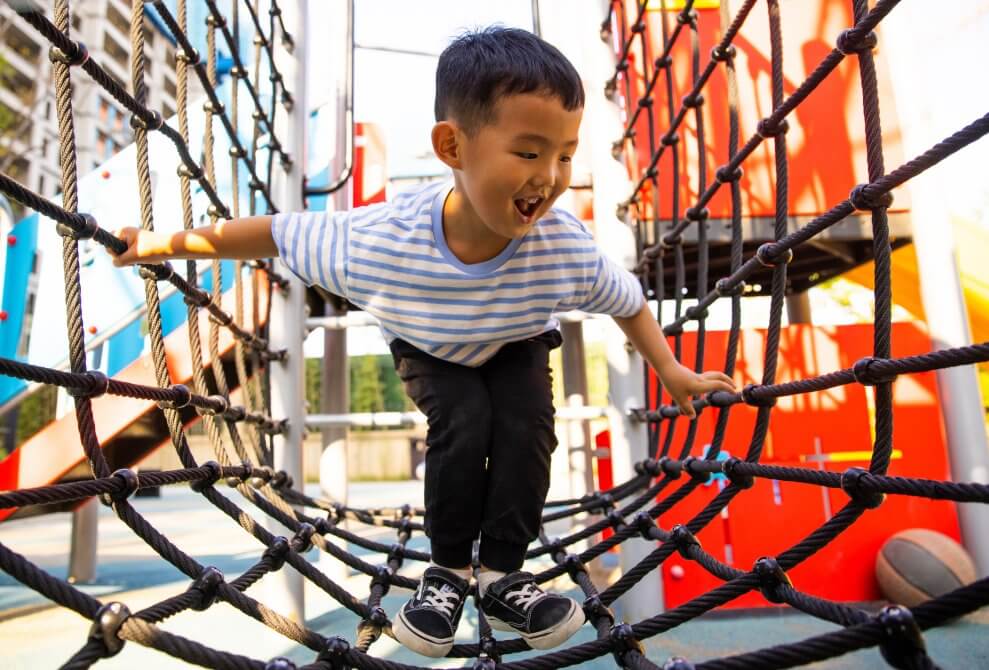
- Height: such as climbing up trees, play structures, big rocks, balancing on logs, or swinging as high as possible
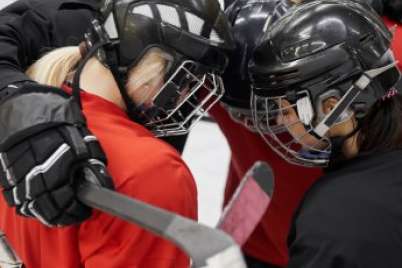
- Speed: such as running, riding a bike or skateboard, or skating quickly
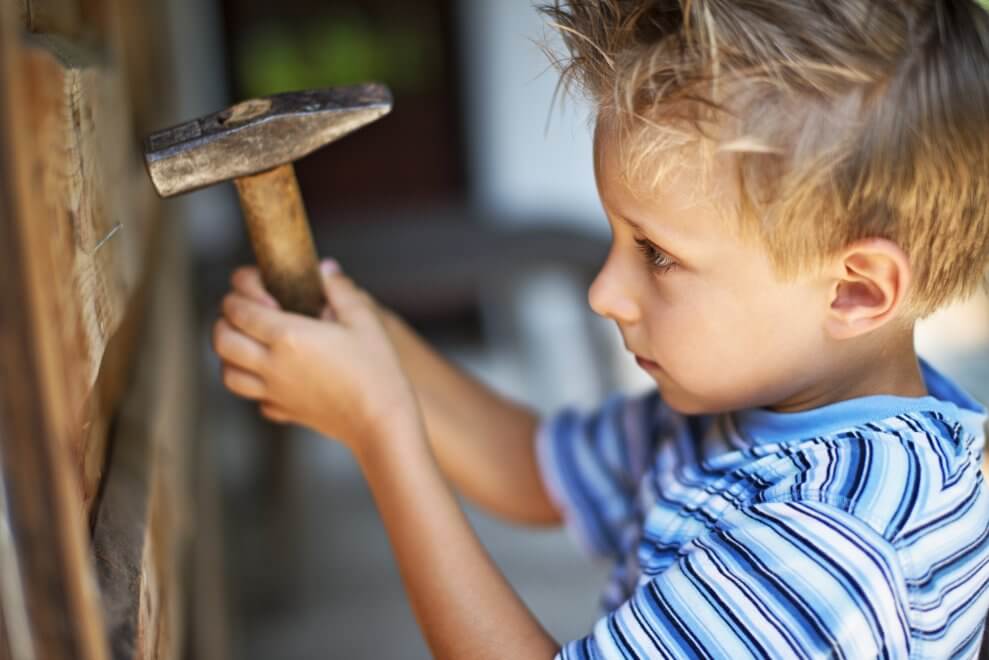
- Playing with tools: such as using a knife to whittle a stick into a new shape or using a hammer and nails to build a fort
- Playing near elements: such as splashing in a creek or being involved in starting and managing a campfire
- Playing with a chance of getting lost: such as walking ahead on your way to school, hiding, or wandering in woods
- Rough and tumble play: such as play fighting or fighting with sticks
Why is risky play important?
My first instinct with my child was to immediately save him from whatever horrible accident I imagined might occur.
But when I couldn’t get to him “quickly enough,” in my mind, I began to realize that he was not only figuring things out on his own but he was becoming more confident and more thrilled!
When kids push themselves during unstructured play to climb higher, run faster, or engage in any other form of risky play, they learn about their own limits (which makes their play safer in the long run), how to problem-solve, and how to make decisions. They become more brave, more inquisitive, and more creative. And when they know they can push the limits of how they play, they tend to become less bored with the exhilaration of challenging themselves and overcoming their worries of “What might just happen if…”
How do we stop ourselves from jumping in when we’re nervous?
As I realized that my son was figuring out ways of challenging himself more and more, he did have a few scratches and cuts. But they were minor and they were all part of his journey in discovering how far he could push his limits.
And as his limits expanded, my fears lessened.
When a child senses that their parent is anxious, it sometimes makes them worried too. So how do we convey our confidence in our kids and give them the space and time to “figure it out?”
Mariana Brussoni is a professor in the pediatrics department at the University of British Columbia as well as an investigator with the BC Children’s Hospital Research Institute and the BC Injury Research & Prevention Unit.
She’s also a strong advocate of the 17-second rule.
Instead of jumping in at the first sign of your child doing something that makes you worried during free play, step back. Breathe. Count to 17. And watch.
Sometimes it’s hard to stop ourselves from imagining the worst-case scenario, from stepping in to stop our child doing something that scares us. What is a simple, underwhelming first step that parents can take to break this habit? The 17-second rule gives parents and caregivers an opportunity to slow their thinking down and not act on their immediate fear.
Slowing down gives parents and caregivers a chance to see whether it’s really necessary for them to step in, to assess whether the situation is really as dangerous as they first thought, to notice that their child is capable, and to appreciate the many benefits that their child gets from being able to manage things on their own. The 17-second rule can be a handy first step as parents and caregivers rethink their approach to risky play.
-Mariana Brussoni
In those 17 seconds, we’re giving our kids the chance to problem-solve and think about their next step. We’re also showing our kids that we are confident in them.
How can we implement the 17-second rule with our kids?
While we do still want to be present when our children play, how can we practice the 17-second rule and give our kids the time and space they need to build their skills and confidence?
- Next time you’re at the playground and see your child dangling from the high monkey bars with one hand, instead of running in to catch your circus performer, step back. Count to 17 and see if your child can figure out if they can reach the next ring.
- When you’re heading off to school, let your child go outside and start to walk alone. Count to 17 before joining them.
- When your child tries to climb up to a new branch of a tree in the backyard, pause and count to 17 before calling out “Be careful!”
- If your child is wrestling with a friend, 17 seconds can be a good time to assess whether they’re “play” fighting. Play fighting = smiles and laughing. Real fighting = crying and upset.
- When your child is using a whittling knife to make a magic wand and you’re certain they’re going to cut their hand, wait 17 seconds and see if your help is needed.
- When you’re on a hike and are sure there are many roots, stones, and slippery leaves that could cause your child to stumble, wait 17 seconds before pointing them out.
- When your child has decided to roll down a steep hill, count out those 17 seconds before calling out for them to slow down.
Following the 17 seconds, if all is going well, a few words of praise will go a long way.
- “You’re doing so well!”
- “I love how you managed to figure out the best way to climb up that tree!”
- “I’m so impressed with how you balanced on those logs!”
The 17-second rule will grow your confidence in your child and their confidence in themselves, which is a positive step forward for their well-being now and in the future.