Wobble, fall, grow: How to build resilience with balance yoga poses for kids
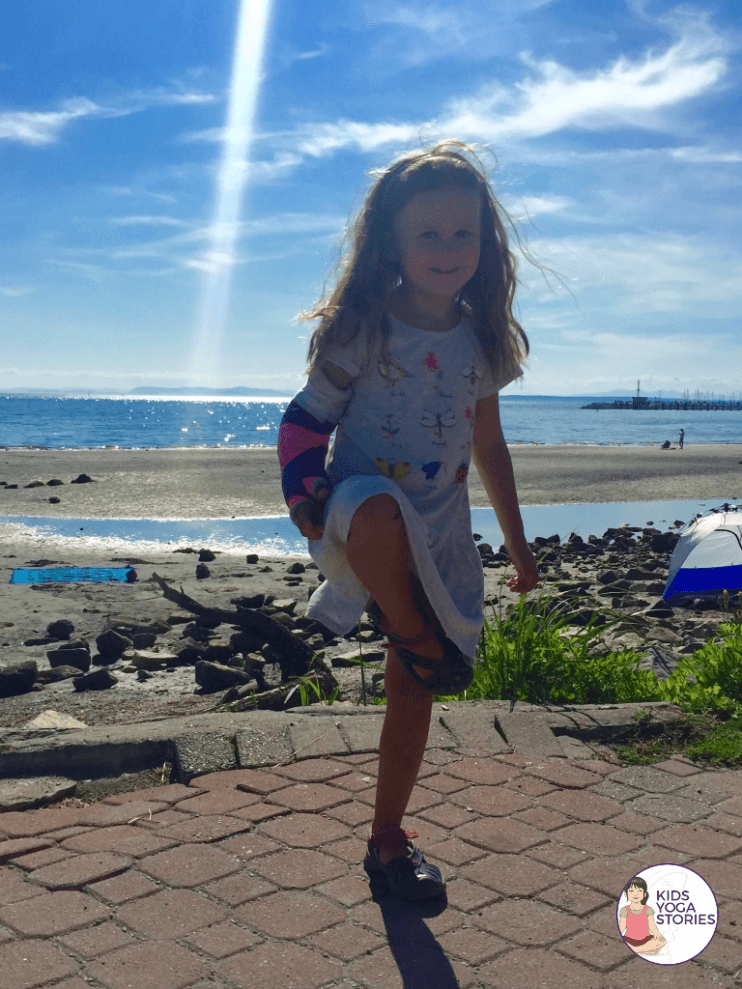
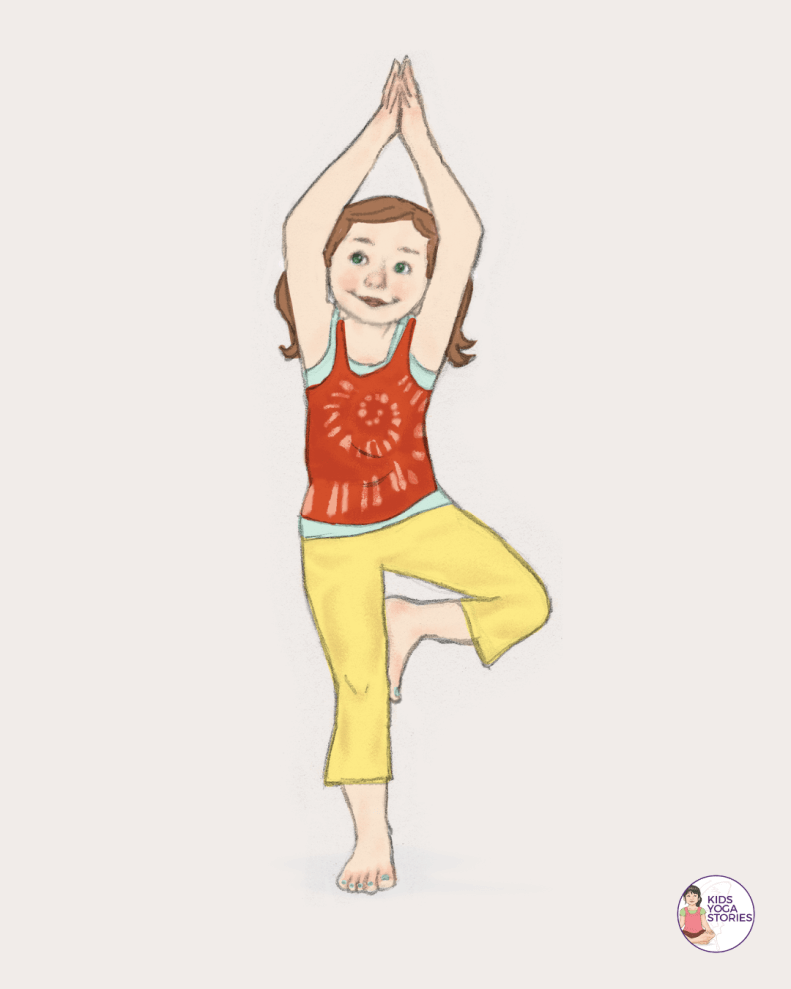
My daughter and I were out on a walk when she spotted a grove of trees swaying gently in the breeze. We often practice yoga poses “out in the wild,” inspired by whatever we see around us. “Mom, let’s do Tree Pose!” she said, already positioning herself on the trail.
Now, here’s what you need to know about my daughter: she doesn’t do anything unless she can do it perfectly. She’s always been like that. So when she wobbled and fell out of the posture, I braced myself. But instead of giving up, she reset her stance and tried again. And again. Each time she swayed and caught herself (or didn’t), she adjusted and tried again, determined to hold it “just right.”
That moment reminded me why balance yoga poses for kids are so much more than physical exercise. They’re training grounds for one of life’s most essential skills: resilience.
The hidden gift in every wobble
When we think about preparing our kids for life’s challenges, we might sign them up for tutoring to boost their grades, sign them up for team sports to build character, or arrange playdates to help them make friends. But there’s something beautifully simple hiding in plain sight: the ability to literally lose your balance and find it again.
Physical balance practice directly translates to emotional resilience. By practicing yoga poses for kids that focus on balance, children build both core strength for active play AND the mental toughness to handle setbacks with grace. That wobble in Tree Pose? It’s teaching your child the exact same skills they’ll need when they face a tough test, lose a game, or navigate a friendship conflict.
Balancing yoga postures provide immediate, safe opportunities to practice failing and recovering—sometimes dozens of times in a single session! Practicing balance poses regularly increases self-regulation, improves the ability to cope with stress, and enhances resilience. Children develop better emotional control and boost their confidence and self-esteem.
Why “falling forward” builds confidence
Think about the last time your child tried something new and difficult. Maybe they were anxious, hesitant, or afraid of making mistakes. Now imagine if they’d had hundreds of practice runs at losing their balance and recovering in a safe, supportive environment.
That’s exactly what balancing yoga poses for kids provide.
When children practice poses like Tree Pose, Warrior 3 Pose, or Eagle Pose, they experience what could be called “falling forward.” These are controlled challenges where wobbling becomes valuable information about how to adjust and improve. Each time they sway and catch themselves, they’re rewiring their brain to see challenges as opportunities rather than threats.
Sure, my daughter’s determination helped her master Tree Pose that day on the trail. But something deeper was happening. Over time, I’ve watched this practice shape how she approaches challenges.
Her perfectionism hasn’t disappeared. She has instead learned that when she falls out of a yoga posture while we’re exploring “in the wild,” she can adjust, steady herself, and try again. That practice helped build the persistence she draws on when tackling tough homework, preparing for a test, or navigating friendship challenges at school.
This change happens because balancing yoga poses for kids uniquely accelerate growth. Practicing balance poses regularly increases self-regulation, improves the ability to cope with stress, and enhances resilience. Children develop better emotional control and increased self-esteem because balance poses compress the challenge-fail-adapt-succeed cycle into minutes instead of months.
Creating your home balance practice
These yoga postures for kids require zero equipment and minimal space. Here’s how to create a supportive environment where wobbling becomes learning:
- Start with the right mindset. Before you even begin, tell your child: “The goal isn’t to stay perfectly still. It’s to notice when you wobble and bring yourself back to centre. Every wobble is your body learning something new.”
- Choose age-appropriate poses. For younger kids (ages 4-7), stick with simpler balances like Extended Cat Pose or Tree Pose. Older children (ages 8+) can try more challenging variations like Warrior 3 Pose, Dancer’s Pose, or Half Moon Pose. (See illustrations of these poses, plus step-by-step instructions, below.) The key is finding that sweet spot where the posture is difficult but achievable with practice.
- Make it playful. Turn balance practice into a game. How long can you hold Tree Pose while I tell you a silly story? Can you switch legs without putting your foot down? What happens if you close your eyes? Play creates the psychological safety kids need to take risks and fail without fear.
- Celebrate the wobbles. This is so important. When your child wobbles, smile and say “Perfect! You fell out. That means you’re learning. Let’s try again!” or “I saw you bring yourself back. That’s exactly what we’re practicing!” Your reaction teaches them that recovering from imbalance is the actual skill, not avoiding it.
- Practice together. Children learn by watching us navigate challenges. When you wobble (and you will), let them see you laugh, adjust, and try again. Your modeling matters more than perfect form.
You can also try incorporating these balancing yoga poses for kids into your daily routine:
Tree Pose
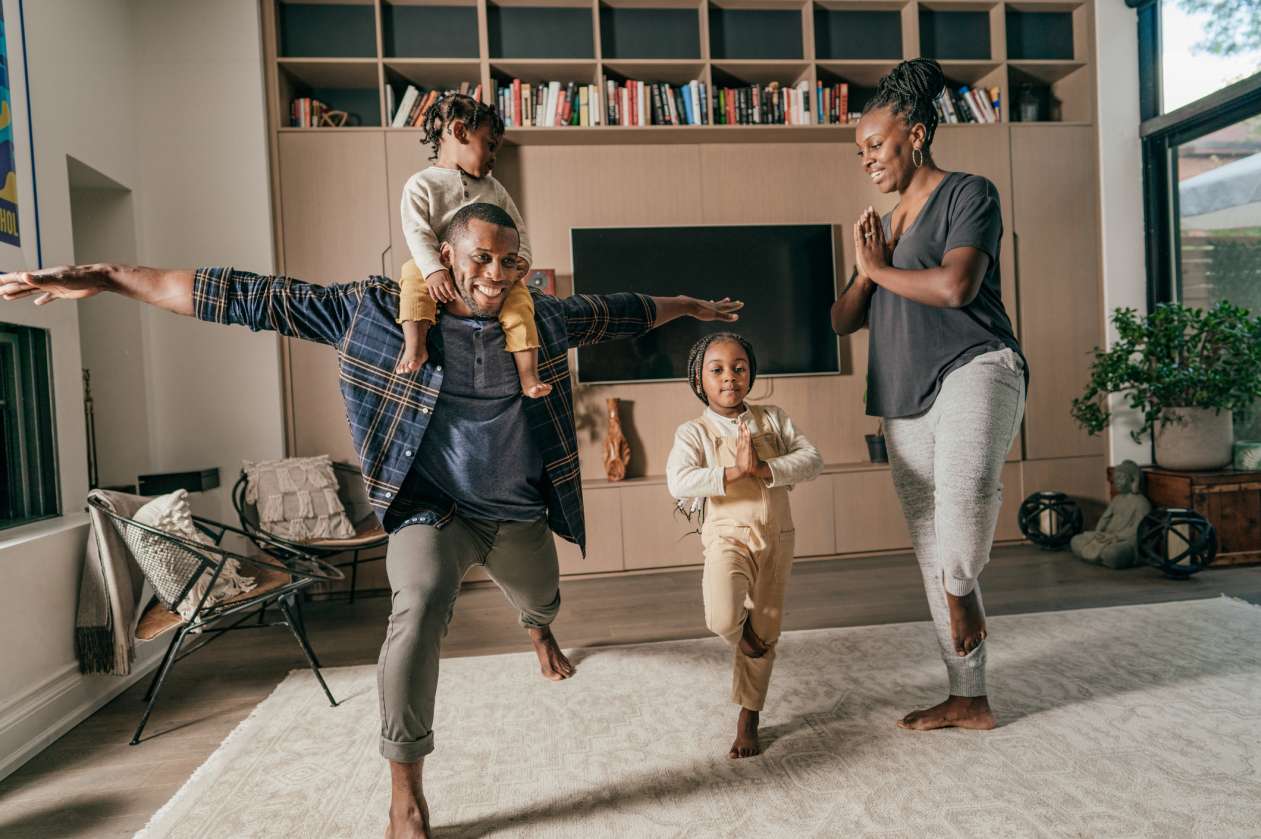
Stand on one leg. Bend the knee of the leg you’re not standing on, place the sole of your foot on the opposite inner thigh or calf (just not on your knee), and balance. Try holding the yoga pose for 10 to 30 seconds on each side.
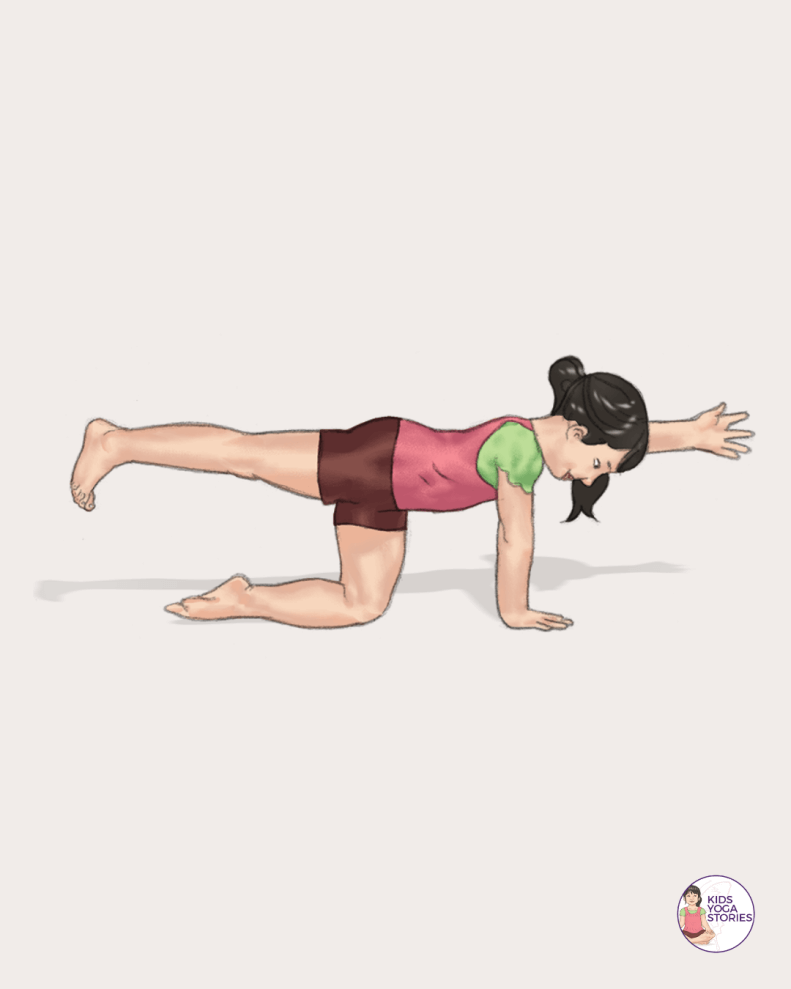
Extended Cat Pose
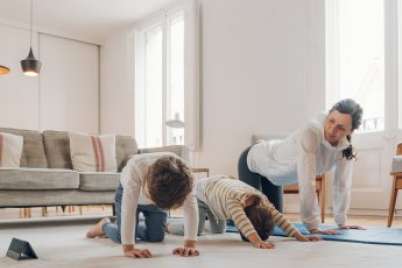
Come to all fours, extend one leg out behind you, and look forward. Take the opposite arm out in front of you to balance. Try holding for 10 to 20 seconds then switch sides.
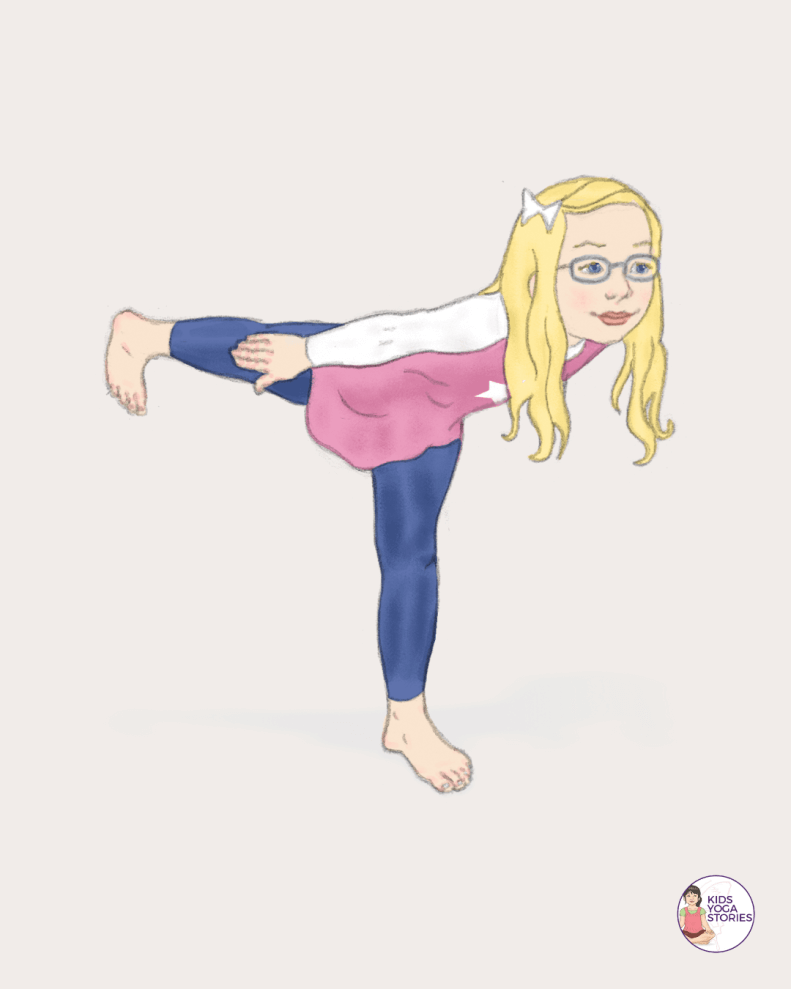
Warrior 3 Pose
Stand on one leg. Extend the other leg behind you, flexing your foot. Bend your torso forward and take your arms back alongside your body or extend them forward. Try holding for 10 to 20 seconds then switch sides.
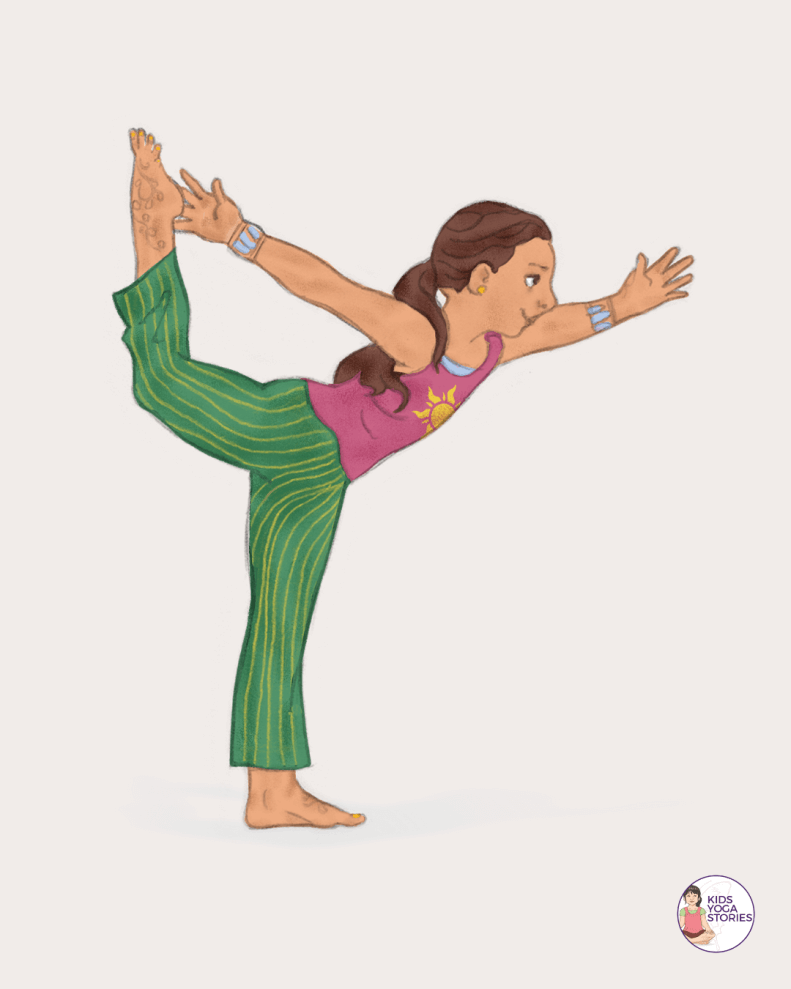
Dancer’s Pose
Stand tall then stand on your right leg, reach your left leg out behind you, and place the outside of your left foot into your left hand. Bend your torso forward, with your right arm out in front for balance, and arch your leg up behind you. Try holding for 10 to 20 seconds then switch sides.
Eagle Pose
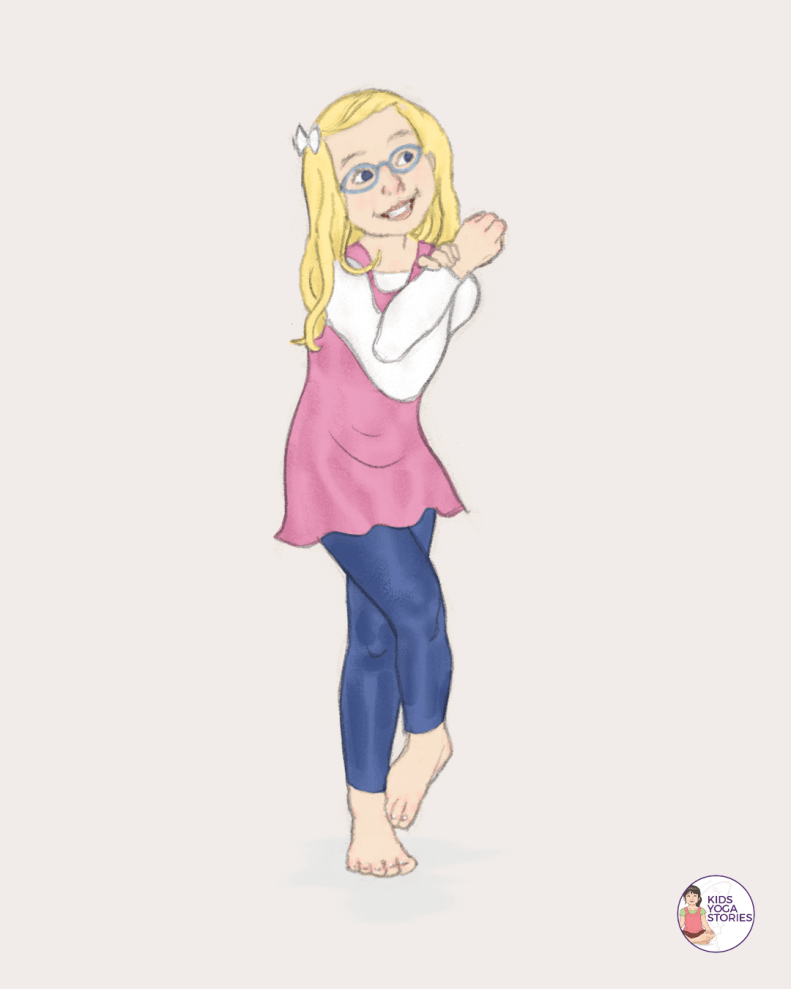
Stand tall then wrap your left leg around your right. Bring your bent arms out in front of you, wrap your right arm around your left arm, and bend your knees slightly. Try holding for 10 to 20 seconds then switch sides.
The bigger picture
These skills transfer immediately to real life. By practicing balance yoga poses, kids will often show improved confidence in other areas. They’re more willing to try new activities. They also get better at handling disappointments and become more patient with themselves when learning is hard.
This is what we’re after. Not perfect balance, but unshakeable resilience. Not avoiding challenges, but embracing them. Not fearing falls, but knowing how to rise again.
Ready to start incorporating balance yoga poses?
We can’t prevent our children from facing challenges, but we can give them the tools to handle whatever comes their way with grace, confidence, and the knowledge that every wobble is making them stronger. Balance yoga poses for kids offer something rare: a simple, accessible, evidence-based practice that builds both physical and emotional strength. All it requires is minimal time, a bit of space, and the willingness to wobble together.
The question isn’t whether your child will face challenges. The question is: Will they know how to catch themselves when they do?