
Concussion 101: What you need to know about kids’ brain injuries
Over the last decade-plus, concussions in professional sports have topped the headlines. With each news story comes greater public awareness about athletes and risks of brain injury.
But concussions—a common form of brain injury caused by a direct or indirect hit to the head or body causing a change in brain function—can occur when participating in any kind of activity at any level.
According to the National Ambulatory Care Reporting System, which collects data from hospitals, 46,000 children between ages five and 19 had a concussion in 2016 and 2017. And between 2011 and 2017, out of all head injuries from sports and recreation, brain injuries made up 80% of emergency-department visits for youth ages five to 19. Research has shown that children tend to be more sensitive to the effects of a concussion than adults and may need a longer period of rest and recovery before returning to learning and playing.
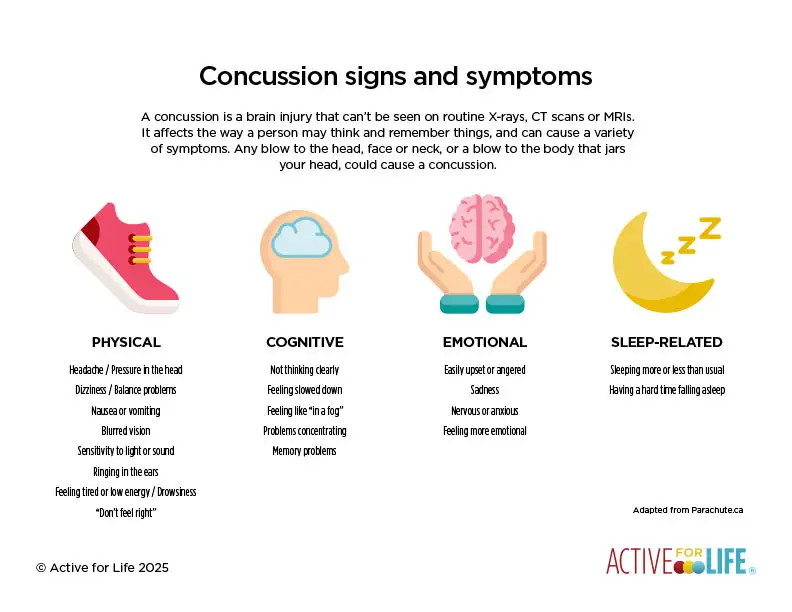
The symptoms are wide-ranging and sometimes long lasting. According to the 2016 5P study: Predicting and Preventing Post-concussive Problems in Pediatrics led by Children’s Hospital of Eastern Ontario (CHEO) and nine pediatric emergency departments across Canada, one-third of more than 3,000 children evaluated in the first 48 hours after head injury experienced ongoing symptoms beyond one month.
When you suspect your child has a concussion, the first step is to remove them from play and seek medical advice from a healthcare professional knowledgeable about concussions.
To learn more about concussions and kids, we’ve compiled these helpful online resources to help recognize and prevent them—plus to offer personal stories from coaches, parents, and kids.
Parachute Canada’s Concussion Ed app
Parachute Canada, a national charity dedicated to preventing injury, has several resources on its website—plus a free app called Concussion Ed. It helps youth, parents, coaches, and educators learn how to recognize and care for concussions. The app can also track the signs and symptoms of a concussion.
Hockey Canada’s Concussion Awareness app
The Hockey Canada Concussion Awareness app provides parents, coaches, trainers, players, and administrators with information on prevention, recognition, and response to concussion injury, as well as responsible return-to-play protocol. For more sport-specific info, check out these safe hockey tips [PDF] from Parachute.
Coaching Association of Canada resources
For coaches, the Coaching Association of Canada offers infographics, resources, and an e-learning module to educate people about the signs and symptoms—and how to treat concussions.
Concussion 101 video by Dr. Mike Evans
Canadian doctor (and father) Mike Evans breaks down the basics about sports and concussions in this video:
Bruising Your Brain: Public talk by the Ontario Brain Institute
During this panel discussion about what science and sport say about concussions, Carolyn Emery of the University of Calgary and Roger Zemek of CHEO lend their scientific expertise to the personal experience of Eric Lindros, who was forced to retire from professional hockey because of concussions. Watch the full talk here.
Ontario Brain Injury Association
Many provincial organizations, such as the Ontario Brain Injury Association, offer tools and support. Here is the OBIA’s free online booklet on how to navigate concussion recovery.
Peds Concussion resources
This website, a project led by Zemek and occupational science and therapy professor Nick Reed, has resources for parents as well as information about sports-related concussions.
Editor’s note: This article was originally published on June 14, 2017. Information presented here is not to be used or relied on for any diagnostic or treatment purposes. Please consult your healthcare provider before making any healthcare decisions or for guidance about a specific medical condition.


