How running helped my ADHD kids thrive + free printable run plans
If you’ve ever parented a child with ADHD, you know that movement isn’t optional—it’s essential. In our house, physical activity has been more than just something to do; it’s a lifeline. It gives my kids structure, confidence, and a healthy outlet for all their extra energy that never seems to end (even when mine ran out hours ago!).
Beyond the physical benefits, it ignites a unique, incredible spark, an energy that, when channeled right, can light up a room.
How running became our magic
From the time my kids could walk, they were in motion: climbing, racing, spinning, and moving constantly. Stillness was never going to be our family’s default, and that’s okay. The trick was giving that energy a purpose.
When my son was young, we tried every “good-for-development” sport: soccer, hockey, gymnastics. But crowds, whistles, and constant instructions overwhelmed him. One day at soccer, I noticed something. He wasn’t focused on moving the ball or passing it to his team, but he was running really fast and loving it.
That was our lightbulb moment. Running gave him freedom without overstimulation. We started small—short jogs around the block, plenty of breaks, and lots of praise. I even made him a running tracker with boxes to fill in after each session. The visual progress was magic for his ADHD brain. Stickers, rewards, and small goals kept him motivated. An added bonus was he even started taking an interest in what he ate to fuel himself to go faster.
Soon, we discovered a local kids’ one-kilometre fun run. We trained for weeks to reach 500 metres, then 1km. Watching him cross that first finish line was unforgettable. It wasn’t just a run—it was a confidence plan. He was learning perseverance, structure, and pride in small wins.

Why movement matters for kids with ADHD
For kids with ADHD, movement isn’t just physical motion—it’s neurological. Exercise increases dopamine, norepinephrine [PDF], and serotonin, the brain chemicals responsible for regulating focus, attention, and mood. When these neurotransmitters are in short supply, as is often the case in ADHD, movement naturally boosts them, helping kids think more clearly and manage emotions.
For our family, the benefits were easy to see in my children: calmer evenings, fewer meltdown moments, and a positive channel for excess energy that would otherwise be disruptive. Running became our natural therapy.
We can’t forget about the consistency running teaches kids. A simple running plan helps develop routine and goal-setting—two areas where ADHD brains thrive with structure. When we add fun tracking tools or checklists, it taps into the brain’s reward centre, making progress tangible and motivating.
How to get kids started with running
Every child is different, so adapt your approach to their needs. Here’s what worked for us—it might help your family too!
- Make it fun, not forced
Keep it lighthearted. We race to mailboxes, count squirrels on the route, or make up silly team names. Novelty keeps ADHD kids engaged, so don’t worry about sticking to one routine. We made it part of our family’s daily routine—not another thing on the to-do list, but something we look forward to. - Start small
We began with 500 metres and then upped it to 1km, then 2km, and 5km. For your kids, you may start with running a few houses down the street. Most medical professionals say it’s safe for kids ages five to eight to run short distances, between 1-2km, depending on their comfort and fitness level. - Track progress
ADHD brains thrive on visuals. Use a running chart where your kids can check off completed runs. They’ll love the visual reward, and it builds accountability in a positive way. Remember, like adults, they need to feel motivated to continue. - Mix in variety
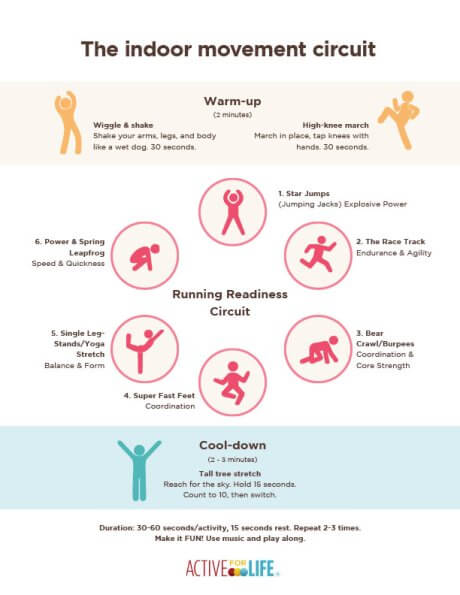
Alternate runs with obstacle courses, treasure hunts, or fun games. For holidays, I create hunts with both mental and physical clues: push-ups for a hint or answering trivia questions while holding a weight for their next clue. If the weather isn’t great, we’ll do a series of jumping jacks, burpees, and bear crawl exercises instead of running. - Celebrate every win
Whether it’s finishing a week of training or running their first 2km, mark the moment. A medal, a pancake breakfast, or even a homemade “runner’s certificate” can mean everything. A good rule is to celebrate effort, not just achievement.
Outdoor adventures, all year round
I’m a big believer in outdoor time in every season and every type of weather (okay, maybe not hail). From fall hikes to winter snowshoe walks, nature gives kids space to move and breathe and offers the same benefits as running. It provides a sensory reset that can be grounding for ADHD minds.
Sometimes, just a quick walk in the woods can turn around a tough day. The goal isn’t perfection—it’s participation.
How to make running part of your family’s lifestyle
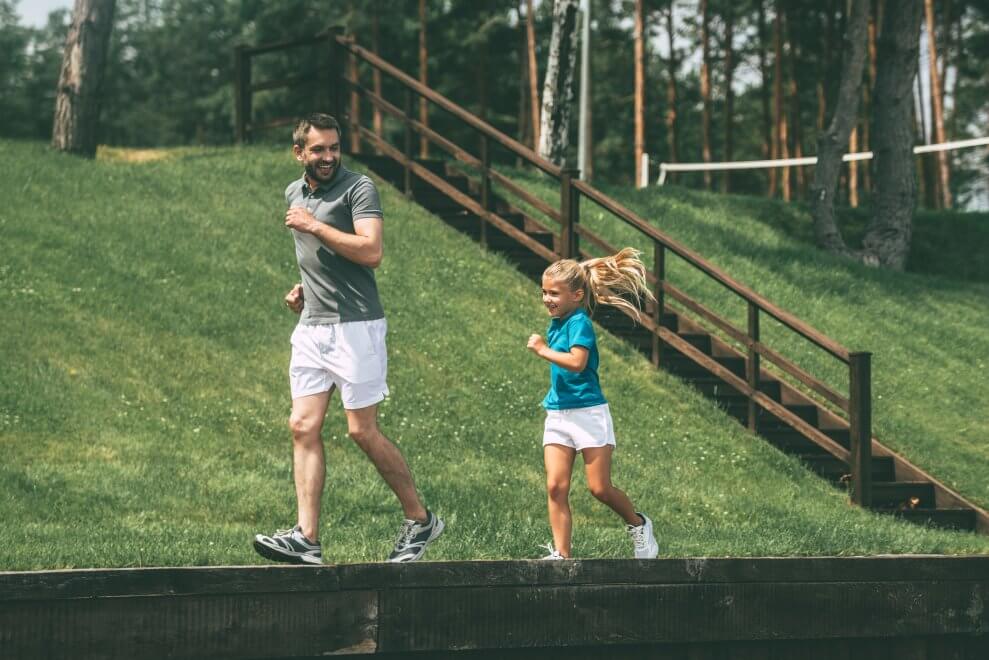
As parents, it’s easy to play coach or cheerleader. But joining the activity changes everything. Running side-by-side with my kids gave us connection time without screens, distractions, or arguments. Sometimes we talked; other times we just ran in silence, side by side, breathing together—some of the best times we shared.
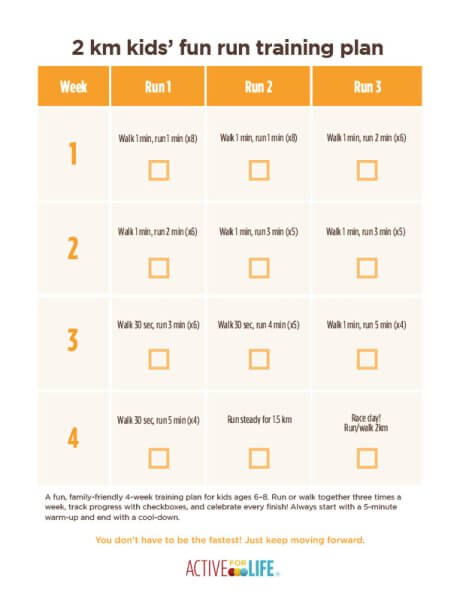
Your child’s first 2km training plan
If your child is between ages six and eight, the 2km distance is a great place to start. The plan below is designed for four weeks—three running sessions per week. You can print this and make a fun “fill-in-the-box” chart.
Tips:
- Always start with a five-minute warm-up walk and end with a cool-down. See the printable below—it’s a great warm-up your kids can follow!
- Bring water and snacks—ADHD brains need fuel.
- Encourage them to talk while running (a sign they’re at a good pace).
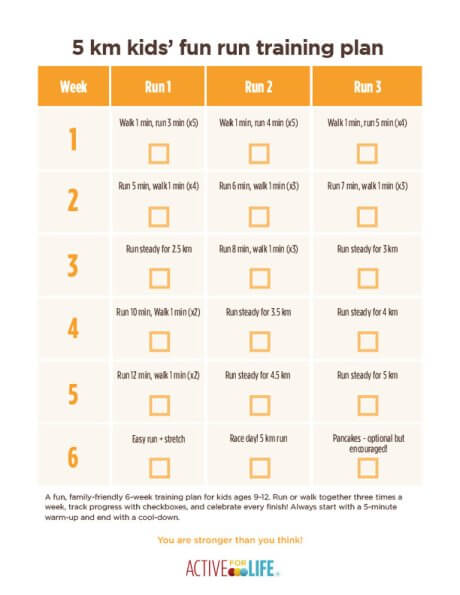
The 5km challenge (for kids ages 9-12)
When my son hit this age, he wanted a new challenge. The 5km was perfect—it gave him a sense of independence and maturity.
Motivational extras:
- Let kids name their training program (“Team Lightning” or “Runaway Penguins”)
- Add stickers or stamps for every run completed.
- Record finish times to show progress over months.
Beyond the finish line
The biggest lesson running taught my kids wasn’t about speed or endurance—it was about resilience. When they fell (and they did), they learned to get back up. When they got frustrated, they learned patience. And when they finished something hard, they learned pride in themselves.
ADHD kids are often told they’re “too much.” Too loud, too active, too distracted. But on a trail or on a track—they are just right. They are focused, free, and full of life.
Now, when my kids feel overwhelmed or angry, they lace up their shoes and go for a run. They’ve learned what I hoped they would all along: sometimes the best way to find calm is to keep moving forward.