How family dogs encourage active play for children
“Guess what?” I asked my three children.
They were huddled around my husband and I in the departures area of an airport. We were on our way home from a working vacation, and we had some news to share with them. Not only would we be moving to a new city but we’d be getting a dog. I knew this move would be challenging, and I hoped that the excitement of getting a dog would help with the transition.
My children had been begging for a pup for years. Not only did our new dog friend help with the transition but Charlie, an Australian Shepherd, brought a whole host of benefits to our home and family, including a boost to my children’s physical activity that continues strong to this day.
If your child is asking for a dog, or perhaps a pup is already part of your family, it might be time to discover (or rediscover) how a canine companion can help boost your child’s physical activity.
In this article, you’ll learn how humans and dogs became companions and how that companionship can improve children’s health and well-being. I’ll then share how family dogs encourage active play for kids and fun activities they’ll love to do together.
How humans took to dogs
Wolves were the very first animals to be domesticated by humans. We don’t know for certain how they became friends, but there are a couple theories.
Tens of thousands of years ago, as our ancestors roamed the land, hunting and gathering food, they’d encounter wolves. For the longest time, the theory was that our ancestors would leave scraps of food and “trash” behind, which wolves would take advantage of. Over time, wolves grew less afraid of humans and humans started to domesticate them.
Another guess is that our ancestors took wolf pups from their pack to raise them. Some of the wolves would have returned to the wild, but others with more social personalities would have stuck around.
Regardless of how family dogs came to be, our ancestors discovered that a canine companion had some obvious benefits: protection against predators and partners for hunting. While some people still have dogs for these purposes, most families love dogs for the companionship they offer.
The benefits of canine companionship for kids
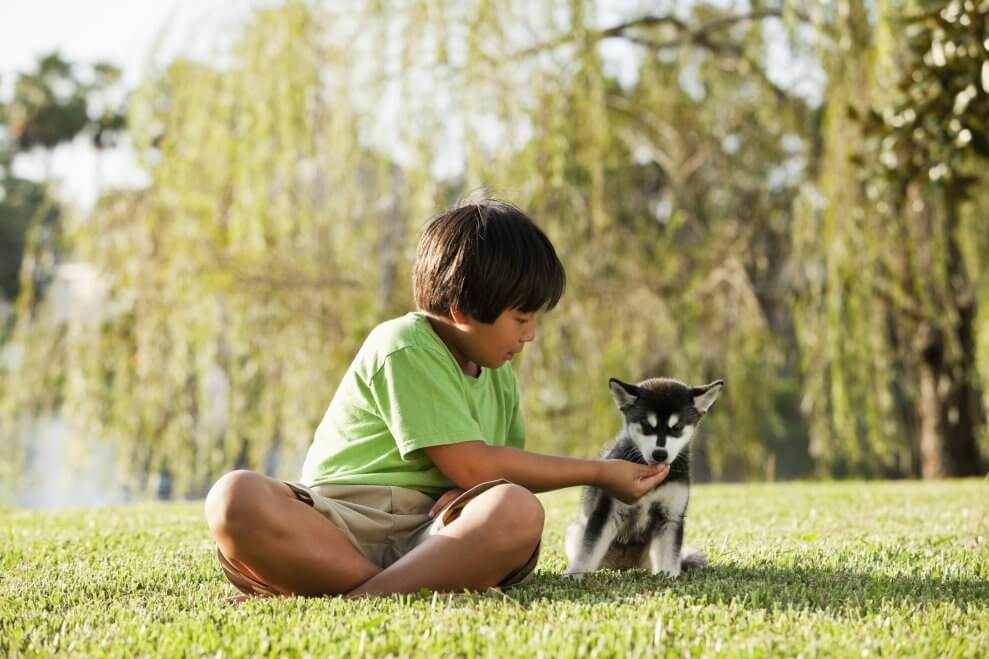
There are many well-documented benefits of owning a dog for children. For starters, dogs’ loyal companionship helps kids feel calmer, safer, and accepted. They can also teach children how to be compassionate, respectful, and patient—important social skills that can help them as they grow older.
Dog ownership can also teach children the importance of responsibility and caring for others through all the feeding, brushing, walking, bathroom breaks, and loving that dogs need to live happy lives. They can even be wonderful companions for children with disabilities, especially when the dogs receive special training.
All these benefits are worth noting, but there’s one more that’s often overlooked: dogs increase physical activity in children!
Dog activities help get kids moving: It starts with bonding
The year I graduated from high school, my parents welcomed a brown Labrador retriever puppy into our home. Zak was the perfect combination of playful, bratty, and adorably cute. He would steal steaks off the barbecue and toques from our head while sledding—and he loved spending time outside with us. He even trained with my father for his first Ironman competition.
Zak got my family moving and I quickly noticed the same thing with Charlie, our pup. He got my kids moving—running, retrieving, playing, and adventuring outdoors.
Our dog friends need regular movement for their health and, when given the opportunity, dogs get kids moving too. However, before sending your child outside with Fido, there’s some important groundwork that needs to happen. One factor in how dogs get kids moving is through bonding—experiencing a positive connection with a dog. The more attached children are to their dogs, the more physically active children tend to be!
To encourage healthy bonding between your child and dog, here are some helpful suggestions:
- Involve your child in supervised and age-appropriate day-to-day care of your dog (feeding, refilling the water bowl, brushing).
- Encourage your child to treat your dog with kindness and respect (petting gently, giving belly scratches, cuddling, and respecting space).
- Teach your child to recognize your dog’s body language: happy (tail wag), stressed (yawning, whining), frustration (growling), etc.
- Have your child help train your dog (learning commands, giving treats).
- Get your child to read out loud to your dog and read books about dogs to your child.
- Train your family dog to behave appropriately around kids (no jumping up, plowing over, nipping, etc.).
Fun ways to get kids moving with dogs
When children begin to see their dog as a friend, they’ll want to follow their pup, play with their pup, and go on walks and adventures with their pup. To encourage even more physical activity for your child and dog, here are some ideas:
- Obstacle course: Create a child- and dog-friendly obstacle course in your yard or roomy spot in your home and see who can complete it the fastest. Change it up and try again.
- Doggy ‘Says’: Have your child copy what your dog is doing. When pup runs, have your child run. When pup sits, your child sits. This activity can also improve bonding.
- Doggy yoga (doga): Get your child to practice dog-friendly or dog-inspired stretches and yoga poses with pup around (downward dog).
- Hide and Seek: Have your child run and hide somewhere in your home or yard and have your dog seek and find. This activity can lead to some great laughs.
- Red Light, Green Light (using dog commands!): Stand on one side of the yard and yell “Come!” (sweep hand to chest) to have them run towards you and “Stop!” (use a stop hand signal) to freeze.
- Treasure hunt: In your home or yard, have your child hide a toy or treat and see if your dog can find it. You can also try hiding a treat for your child too (but make sure it’s not something that will make your dog sick if they get to it first!).
- Toss and run: Have your child throw a ball or toy for your pup and then sprint to another area of the yard before your dog returns.
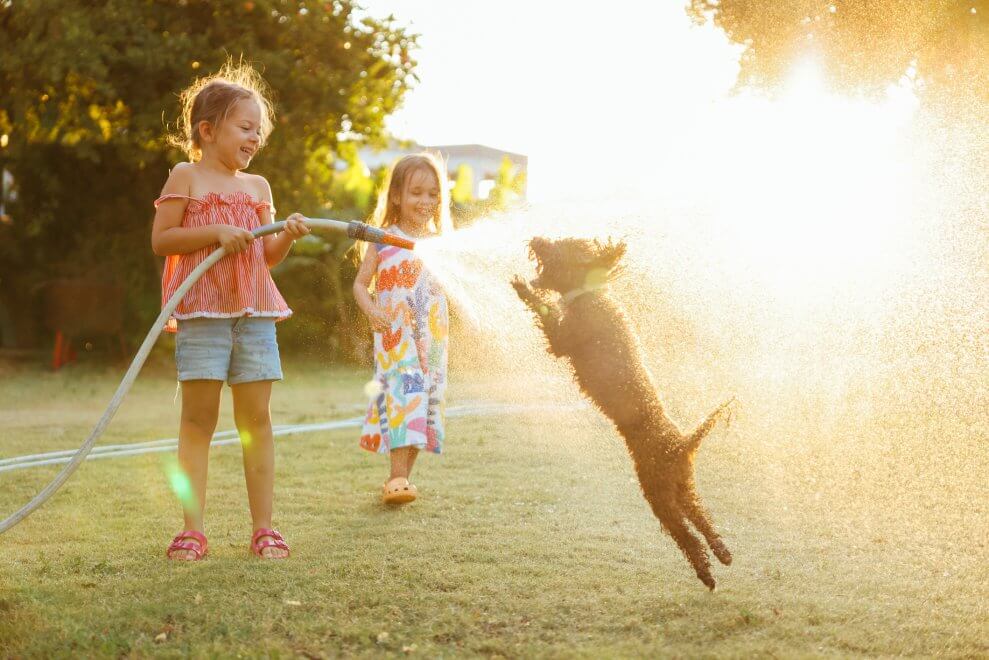
- Water or sprinkler play: Encourage your child and pup to enjoy water play together on a hot day. Splash around at a dog-friendly beach, run through the sprinkler, or even play in a kiddie pool (supervision as needed).
- Bubble pop: Using a non-toxic, dog-friendly bubble solution, blow some bubbles outside and see how many your child and pup can catch and pop.
- Dance party: Put on some fun tunes for your child and pup and get them grooving and having fun together. This is a great opportunity to have your child teach your pup a few “party tricks” (jump, wave, shake a paw, peekaboo).
- Family nature walks: Explore nearby trails with your child and dog.
- Explore dog sports: Older children like tweens and teens may be keen to try junior handling programs, agility, nosework, or other dog sports.
You might also like: 6 ways dogs and kids can have fun moving together.
A few considerations before getting a dog
For the longest time, the answer to my children’s persistent questions about getting a dog was a firm no. Though I had fond memories of Zak, as a young mother of three small children, the timing didn’t feel right. Mentally, financially, and situationally owning a dog didn’t seem wise.
As my children got older, however, our living situation changed. That’s when I started to think that a dog could be a good fit for our family. Caring for a dog can be a wonderful experience, but it’s also a big responsibility. Not only do you have to consider the cost but also the time required. The Canadian Veterinary Medical Association has a helpful resource for considering owning and selecting a pet.
Paws, movement, and lifelong memories
Our dog just celebrated his fifth birthday. Even though he’s beyond puppyhood, Charlie still has zany energy that matches my children’s. His bond with my kids has led to many benefits—and getting them moving has been a significant one. Even as my children get older, Charlie continues to get them out the door and on fun adventures.
Whether you already have a furry friend or are thinking about getting one, I hope this article helps you discover the many benefits, from shared movement to pure fun. If you have some stories to share, or activities to recommend for children and dogs, please share them below.