How to incorporate Indigenous perspectives in early childhood education
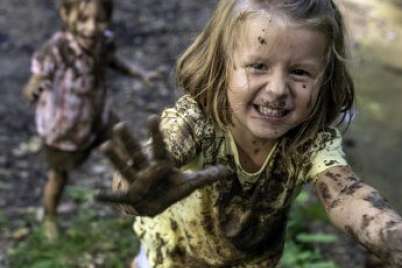
When researcher Monica McGlynn-Stewart studied kindergarteners’ use of iPads in the late 2010s, she noticed that the children were keen to take the devices outside, snap photos of nature, and record themselves singing to the sky and telling stories to bugs. It got her thinking about how she could study children and nature.
A George Brown College professor in early childhood education, McGlynn-Stewart also knew about the Truth and Reconciliation Commission’s calls to action, several of which address children’s education. She talked to two colleagues, Bob Whiteduck Crawford of the Algonquin Nation and Lori Budge, a member of the Wikwemikong Unceded First Nation, and came up with an idea: studying how educators understand and engage with Indigenous perspectives in early childhood education.
McGlynn-Stewart spent four years on the research project, which involved 10 childcare centres in Toronto, on the traditional territory of the Mississaugas of the Credit, the Anishnabeg, the Chippewa, the Haudenosaunee and the Wendat peoples. The 20 participating educators received information about land-based learning and distinct Indigenous perspectives through a newsletter, workshops, and resources, and they were interviewed throughout the study about their understanding of the subject matter and how they were implementing it at their centres.
Budge was the project’s advisor, while several workshop speakers shared teachings from different First Nations, including Dr. Hopi Martin (Ojibwe teachings), Carolyn Crawley (Mi’kmaw teachings), Natasha Bascevan (Anishinaabe and Métis teachings).
McGlynn-Stewart and her team summed up their findings:
- Children were more curious about and engaged in nature
- Children took more leadership in caring for plants and animals in the playground
- Children were calmer and more cooperative
- Educators’ understanding of nature expanded from just thinking about its benefits for children to thinking about the well-being and connectedness of the whole ecosystem
- Educators had a deeper sense of connection with nature
“The findings from this study suggest that developing and enacting reciprocal relationships of gratitude, respect, and care with the Land enhanced the holistic wellbeing of both the children and the educators.”
-Monica McGlynn-Stewart, Nicola Maguire, Lori Budge, Ana-Luisa Sales, and Elise Patterson
What exactly is land-based learning?
Land-based learning is a type of education that recognizes the relationship between Indigenous people and the land, and it’s grounded in Indigenous knowledge and pedagogy. McGlynn-Stewart cites the term “two-eyed seeing,” which Mi’kmaq Elder Albert Marshall defines as learning to see from one eye with Indigenous ways of knowing and the other eye with western ways of knowing. The key is using both eyes together.
According to Mitchell Huguenin, Indigenous pedagogy specialist at Trent University, Indigenous pedagogies in education include:
- The development of the learner as a whole person
- Learning through experience
- Learning through the land
- Recognizing the important role that Elders and Traditional Peoples have in passing on knowledge.
You can learn more about Indigenous pedagogies here.
The difference between western and Indigenous philosophies
For years, McGlynn-Stewart taught a western approach: the world is a pyramid, with humans at the top, followed by mammals, birds, insects, and plants. Humans are superior due to our intelligence, and the rest of creation is resources, existing for our benefit.
But, as she learned during this study, the Indigenous perspective is more of a circle, with humans just one part of an interconnected web. “Far from being the most deserving, humans are the most dependent,” she says. “The trees don’t need us. The rain doesn’t need us. We need all of it.” This is why we should practice gratitude rather than feel superiority.
How to introduce Indigenous perspectives at your centre
First, understand that while there are commonalities in Indigenous perspectives, such as reciprocity, gratitude for nature, and recognizing our interconnectedness with the natural world, Indigenous people represent many different communities, nations, languages, and cultures. Start by researching which traditional territory you live on using this tool.
Here are some simple ways to begin introducing these perspectives:
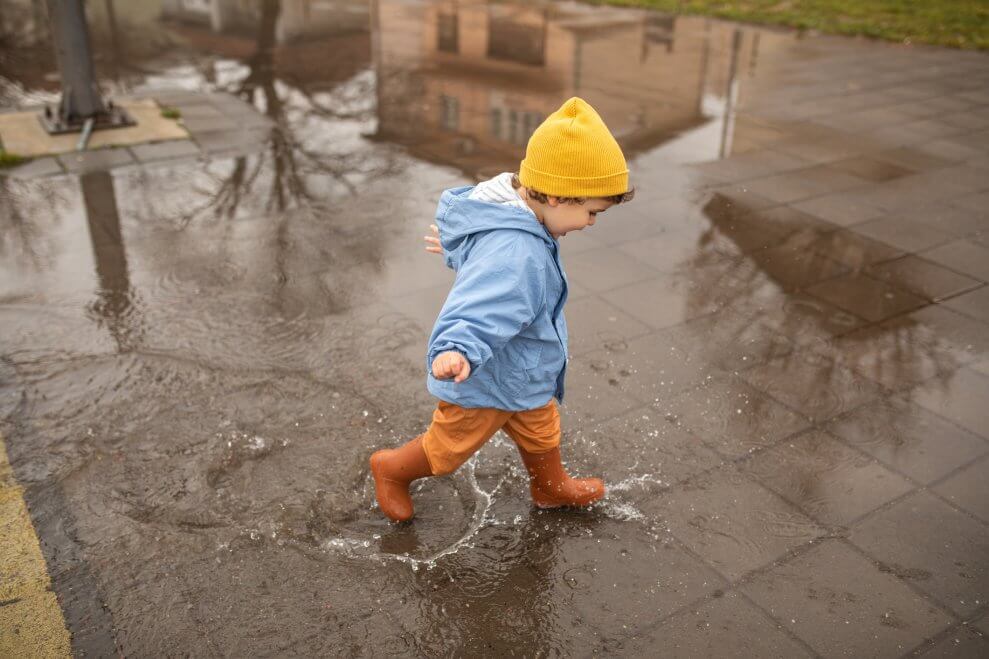
- Encourage children to say hello and thank you to the trees, bugs, wind, and sun. Instead of expressing disappointment when it rains, for example, you and the children can say: “Thank you rain for watering the plants. Thank you for creating puddles so we can play in them.”
- Encourage children to think of the gifts that trees and other plants bring the world (for example: shade, homes for squirrels and birds, food for animals)
- Ask children how you can give back to nature. They may suggest watering plants or trees, not leaving garbage lying on the ground, and being gentle to plants
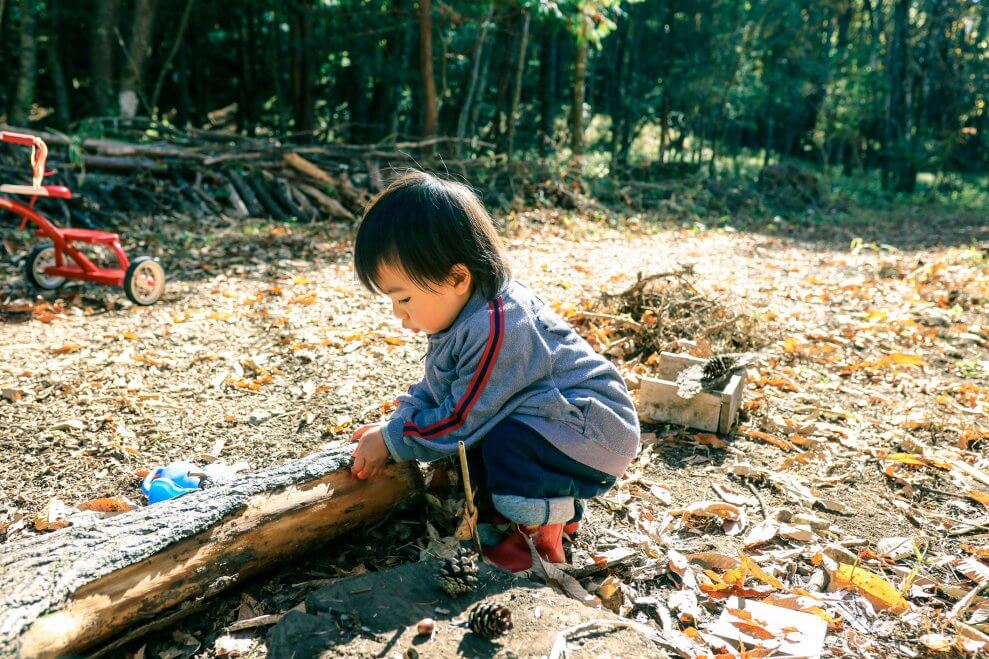
- Encourage children to use all of their senses in play. You can prompt them by asking: What do you see? How do you smell? What do you hear?
- Observe birds around your centre. Do the children know what type they are? You can discuss what gifts birds give us and how we can show them gratitude.
- If children play with water, use it as an opportunity to talk about how water is vital to all living things.
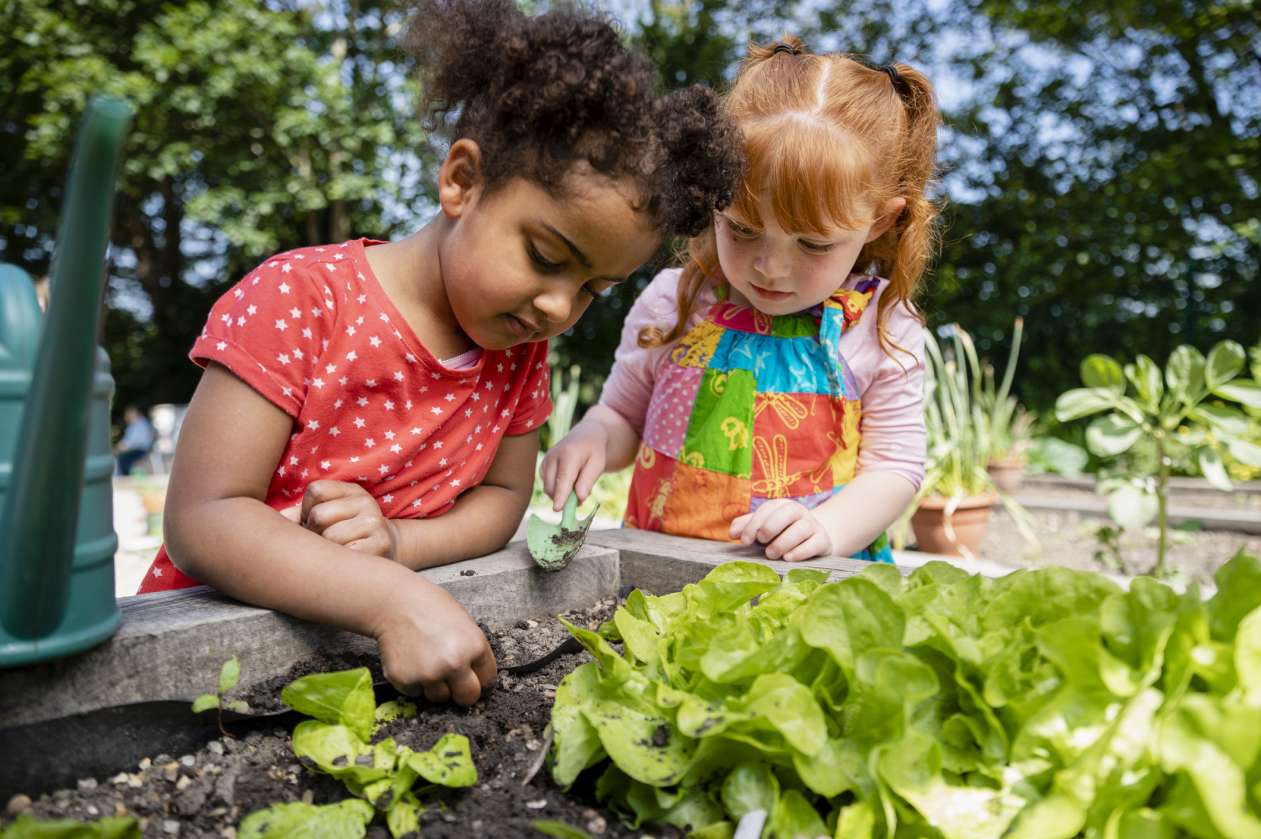
- Gardening is a great way to help children understand how they’re connected to the land.
Other approaches:
- Reading children’s books by Indigenous authors. Here are some suggestions.
- Connecting with Elders, knowledge keepers, or Indigenous educators in your area. (There’s some guidance for how to do this appropriately here.)
How to avoid appropriation
At the start of the study, some educators were hesitant to introduce Indigenous perspectives because they didn’t know much about them or were worried about teaching them incorrectly. Budge created this guide to help instruct non-Indigenous educators.
What does teaching Indigenous perspectives look like in practice?
- In the study group, at a centre in a high-rise apartment, children would run to the window in the morning to say hello to a tree in the playground below. They’d watch what birds sat on the tree and they’d want to make sure it was getting enough water.
- A mix of structured and unstructured time. Some centres introduced a “nature play day,” when ECEs wouldn’t bring toys out and they’d encourage children to interact with the natural world in an intentional way. It’s about balance—there’s nothing wrong with also having more structured play, like specific “gross motor time,” where the emphasis is on children developing gross motor skills.
Resources
- The project site
- The research paper
- PDF: Understanding Indigenous Spirituality
- 12-week course outline for educators
- Project context, book list, and activity ideas
- FAQ
Now retired from George Brown, McGlynn-Stewart works as a consultant and workshop facilitator in Ontario, guiding ECEs in how to introduce Indigenous perspectives. You can reach her at [email protected].
Her primary advice to educators is: “Start small and start slowly. What our educators found so helpful is to ground things in the picture books, because they’re by Indigenous authors, and really pay attention to how the children are engaging with the natural world. Start with ‘hello’ and ‘thank you.’”