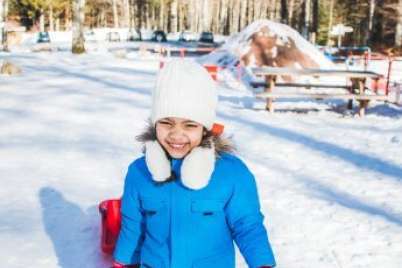
Skeleton: How your kids can try it at home
At the Winter Olympic Games, skeleton is one of the events—and it’s pretty cool to watch! Unlike luge, where athletes lie on their back, skeleton racers lie on their stomach, with their face just inches from the ice. Athletes start with a sprint then jump onto their sledge, using slight movements with their body to travel through the course.
How did skeleton start as a sport?
Skeleton was born in Switzerland out of the popularity of recreational tobogganing. It started in the 1800s when athletes slid down a natural sheet of ice on a simple, bare-bones sled (its bony appearance is how the sport got its name). Today’s tracks are mainly made of artificial ice, and they’re 1,500 meters long. Athletes can travel at up to 120 km/hr.
How cool is this?
- Heat makes skeleton sleds go faster. That means that heating of the sled is against the rules—and even the athletes’ bodies must be within a certain temperature range before they compete!
Here’s how to watch skeleton
Skeleton athletes make two runs down the track and try to get to the bottom as fast as they can. A panel of judges determine the winners based on the total time for the athletes.
How to adapt skeleton for kids
The best way to recreate the skeleton event at home is to head to the nearest toboggan hill with a helmet, a sled, a tube, a crazy carpet, or even an old ski jacket and have kids slide down on their tummies head first. If they want to know how it feels to be in a real skeleton race, suggest that they try to apply pressure or lift up an arm or leg to see what happens.
No snow? No problem
At home, have your child lie down on their stomach on a sofa cushion on the floor, and then try lifting one arm or leg at a time to see what it feels like.
How your child can develop skills for skeleton
Skeleton athletes need to be exceptional at running and jumping, plus they need well-developed agility, balance, coordination, flexibility, and speed (as in explosive “quickness” of muscles). If your child is interested in becoming a skeleton athlete, these activities can help them develop the skills they need:
Editor’s note: This article was first published on Feb. 14, 2014.