The smartwatch dilemma: How to help kids stay connected while supporting their independence
Last school year, my son started taking public transit home from school. I’ll admit I wasn’t as ready as he was. Those first few afternoons, I imagined every possible scenario: Did he miss his stop? Was he safe crossing the street? Would he remember the route? Then he’d call from our Alexa to say he’d made it home safely.
My son doesn’t have a cell phone or a smartwatch. With either, it would have been easy to alleviate my anxiety. I could have tracked his location, known exactly where he was, or even texted him to reassure myself.
As both a parent and a teacher, I completely understand why so many families make the choice to give their child a phone or a smartwatch. I also know that, for many parents, a smartwatch feels like a preferable option to a smartphone: their child can stay connected without having access to social media.
Tech in classrooms has become a global conversation
Around the world, governments and school systems are rethinking children’s relationship with technology. France has banned mobile phones in elementary and middle schools for years, while provinces across Canada have introduced restrictions on cellphone use during the school day to reduce distractions and improve learning.
More recently, the conversation has expanded beyond schools. Australia has introduced landmark legislation restricting access to social media for children under 16. France approved similar legislation in July, and Canada’s proposed Bill C-34, the Safe Social Media Act, would do the same.
Yet while much of the discussion focuses on smartphones and social media, wearable technology has received much less attention.
Smartphones have become much less visible in classrooms, but smartwatches have become more common. I see it every day in my elementary classroom. This makes me wonder whether we’re asking the right questions.
Smartwatches can help children stay connected and give parents peace of mind. But like any tool, they shape children’s experiences in ways we don’t always notice.
The safety benefit vs. the independence cost
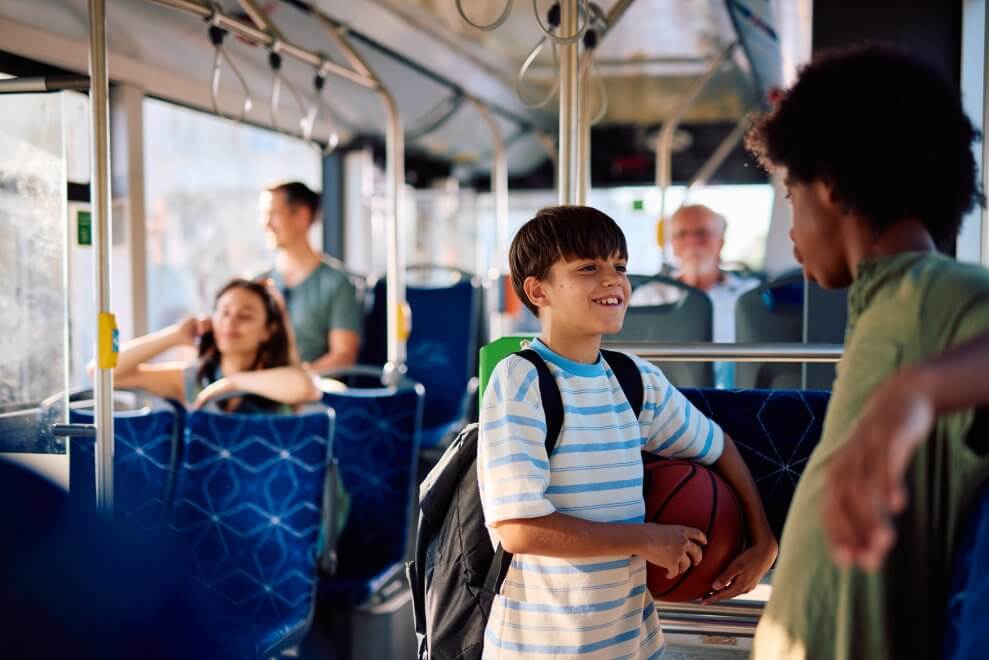
With a smartwatch, a child walking home alone can call if they miss the bus. Parents can check their child’s location during a bike ride to a friend’s house or an after-school activity. For some families, a smartwatch is a way to delay that first smartphone without missing out on connection.
These are real benefits. It’s easy to see why smartwatches feel like a thoughtful compromise between safety and independence.
Parents’ and caregivers’ desire for reassurance is what’s driving adoption. Research shows that 92% of parents of children ages 4 to 12 buy smartwatches for location tracking and simple communication, often instead of a phone. Canada’s kids’ smartwatch market is projected to grow 14% annually through 2029, reflecting just how quickly these devices are becoming part of childhood.
Wanting to know your child is safe is one of the most natural instincts there is. But how can we protect them while still giving them room to build confidence and independence?
Smartwatches are a distraction on kids’ wrists
Many parents choose a smartwatch because it feels simpler than a phone—and in a lot of ways it is. But in the classroom, I’ve found that it’s not always that simple.
Unlike smartphones, which are usually either put away or in students’ hands, not, smartwatches stay on children’s wrists throughout the day. Teachers can’t reasonably know which watches are in “school mode,” which can send messages, or what restrictions individual families have chosen. That makes it much harder to set clear, consistent expectations for everyone.
Even when messaging is limited, many watches still include colourful watch faces, animated pets, achievement badges, or interactive features that respond when kids tap the screen.
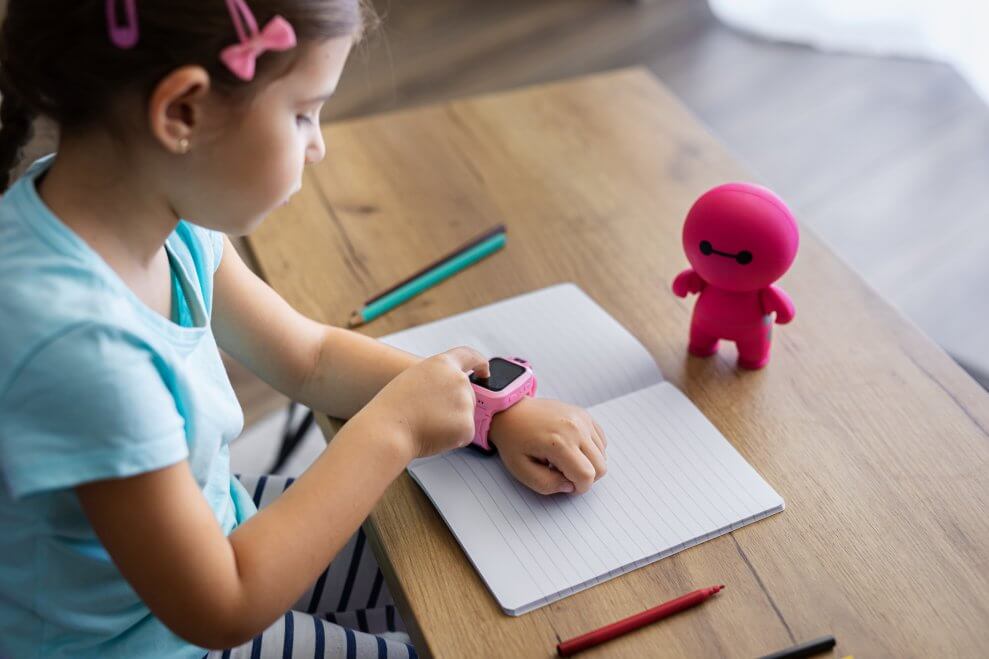
As a teacher, I’ve watched children repeatedly glance at their wrists—not because they’ve received a message, but because their watch invites interaction. Research on digital interruptions and attention suggests that even brief, repeated shifts in attention can make it harder to return to a task and maintain focus.
That doesn’t mean a smartwatch is the same as a smartphone, nor does it mean every glance at a watch is harmful. It’s a reminder that many digital devices are designed to encourage us to look at them repeatedly, whether through notifications, animations, or other interactive features.
From the front of my classroom, I see these moments of distraction happen again and again. During lessons that require sustained attention, many children instinctively glance at their wrists or interact with their watch before returning to the task at hand. Individually, those moments seem insignificant. Seen repeatedly throughout the day, they become much harder to ignore.
Another thing I’ve noticed about smartwatches in the classroom?
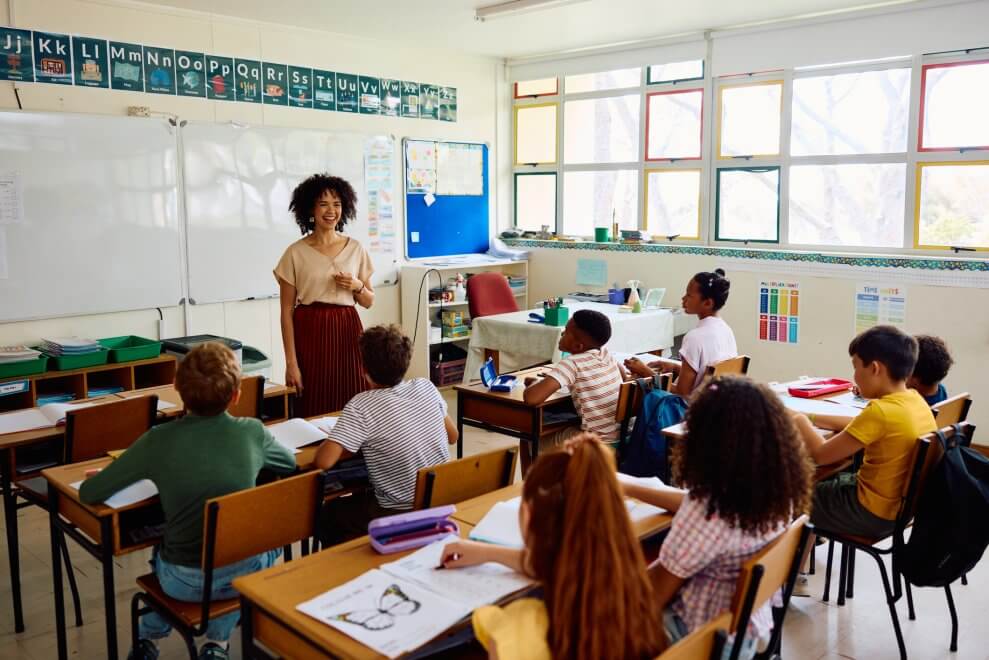
Many students are communicating with parents through their watches. They’re messaging about forgotten lunches, homework, after-school plans, or feeling unwell—things that, not long ago, would have been handled through their teacher or the school office. I’ve also seen children arrange playdates or message their parents before first trying to solve a problem at school.
I’ve even noticed that some kids seem less comfortable walking into the school office to ask for help. Sending a quick message home can feel easier than approaching a trusted adult in person. This makes me wonder: What opportunities do children miss when every small problem can be solved with a quick message home?
Not long ago, if they didn’t feel well, or left homework at home, or wanted to ask their parents a question, kids had to ask a teacher for help, visit the office, figure out a backup plan, or simply wait until the end of the school day. These situations may seem small, but they give children opportunities to practise communication, problem-solving, emotional regulation, and resilience.
Why facing everyday challenges matters
Child development isn’t only about keeping children safe. It’s also about gradually helping children become capable.
Everyday challenges, such as asking a teacher for help, working through a disagreement with a classmate, or figuring out what to do when something goes wrong help build executive functioning—the mental skills that allow children to plan, adapt, solve problems, and regulate their emotions. These skills develop through repeated opportunities to practise making decisions, adapting to challenges, and recovering from small mistakes.
Research on autonomy-supportive parenting suggests that children develop stronger executive functioning when adults gradually encourage them to solve age-appropriate problems on their own while remaining available to guide and support them.
Why independence matters
Social psychologist Jonathan Haidt is one of several experts encouraging parents and communities to think differently about childhood. In his book The Anxious Generation, he argues that children need greater protection online but more freedom in the real world to explore, solve problems, and develop confidence.
Psychologist Peter Gray has long argued that independent play and age-appropriate risk help children develop decision-making, resilience, and problem-solving skills. Similarly, researcher and author Ellen Galinsky‘s work on executive functioning suggests that children build important life skills when adults gradually support—not replace—their efforts to think, plan, adapt, and solve problems for themselves.
There’s a common theme here: Children become capable by being trusted with gradually increasing responsibility—not by having every challenge removed for them.

Is a smartwatch the right fit for your family?
There isn’t a single “right” age for a smartwatch. The more important question is whether it’s meeting a genuine need or replacing an opportunity for your child to build confidence and independence.
Before you buy a smartwatch
Ask yourself:
- What problem am I trying to solve?
- Could my child practise this skill first?
- Is there a simpler solution?
- Will this help my child become more independent or replace an opportunity to build independence?
- Could something simpler meet the same need?
If your main concern is communication after school, there may be other options. Your child may be able to:
- Borrow a school or community phone if plans change
- Memorize one or two important phone numbers
- Have a regular check-in time after arriving home
- Carry a basic phone only when needed instead of wearing a connected device throughout the day
If your child isn’t travelling independently yet, it may be worth revisiting the decision in a few months rather than buying a device “just in case.” Sometimes delaying technology is just as valuable as choosing the right technology.
How to help your child build independence
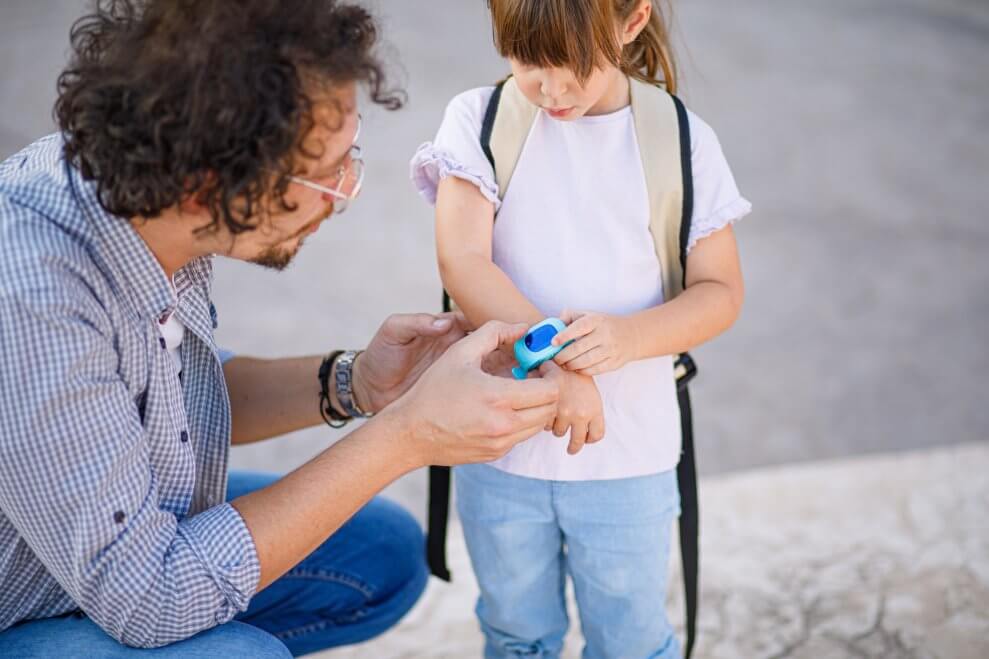
Many of the skills a smartwatch is meant to support—confidence, problem-solving and independence—can also be built through everyday experiences. Here are a few ideas to try with your child, along with some additional Active for Life resources.
How to build confidence for the journey to/from school:
- Walk the route together several times.
- Practise taking the bus together before your child rides alone
- Role-play common situations (What if they miss their stop? What if practice ends early?)
- Help your child identify trusted adults they can ask for help
- Encourage your child to memorize one or two important phone numbers
- Set up a regular family check-in routine after school
Looking for more ideas?
These Active for Life resources can help you build confidence and independence, one step at a time:
- Why children need risk, fear, and excitement in play—and why adults’ fears put them at risk
- The 17-second rule & the importance of risky play
- Age-appropriate chores for kids: Building life skills for future success
- 9 simple ways to help your child build resilience
- Active school travel toolkit
- As safe as necessary: A new way of looking at risk
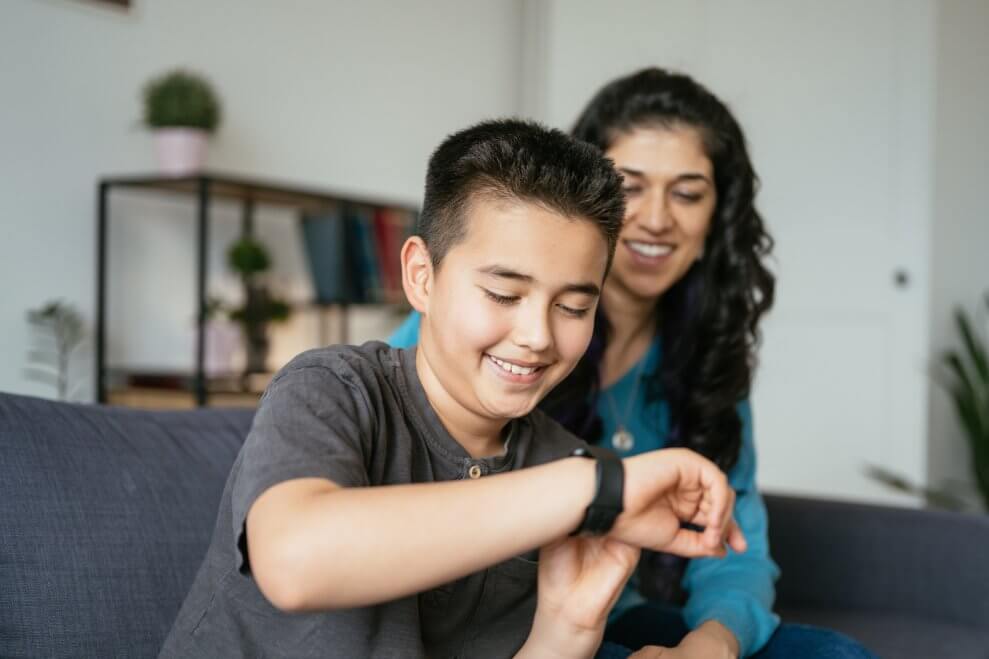
If your child already has a smartwatch
A smartwatch doesn’t have to replace opportunities for independence. A few small changes can help them use it more intentionally:
- Turn off non-essential notifications
- Choose a simple watch face instead of interactive or animated ones
- Set clear expectations about when it should and shouldn’t be used
- Encourage your child to seek help from trusted adults before messaging home for non-urgent situations
- Talk through “what if?” scenarios before they happen
- Gradually increase opportunities for independence, whether that’s walking home, riding transit, running a small errand, or visiting a friend’s house
My takeaways as a mom
I still worry when my son takes public transit home from school, and I suspect I always will. That’s part of being a parent. Would a smartwatch make me feel better? Probably. But it has also forced me to ask myself an uncomfortable question: Would the watch be helping him—or helping me?
I know now his first bus rides weren’t only helping my son become more independent. They were helping me learn to let go. Every time he makes that journey on his own, he’s building confidence, practicing responsibility, and learning that he’s capable.
Technology can absolutely play a role in helping keep our children safe, and for some families, a smartwatch may be the right choice.
But as we continue rethinking children’s relationship with technology, perhaps it’s also worth asking not only how smartwatches help children stay connected—but whether they still leave room for the small moments that help children become confident, capable, and independent.