How to make your phys ed class inclusive for all learners
Physical education is at its best when it brings out the potential in every student. When parents and educators collaborate to create inclusive gym environments, we can build a foundation where all students—regardless of ability—feel challenged, valued, and supported.
Inclusion goes far beyond sharing the same classroom. It’s about active, meaningful participation that nurtures every child’s confidence, self-worth, and social connections. In our schools and homes, inclusion means designing activities and environments so that every student—whether they’re physical movers, neurodivergent learners, or developing at their own pace—can participate side-by-side with their peers. No student should be left on the sidelines or assigned passive tasks. By embracing inclusion, we teach our children empathy, teamwork, and mutual respect.
To make physical education genuinely welcoming, let’s look through the lens of the social model of disability, which focuses on removing societal barriers. Traditional mindsets often view a child’s physical or cognitive differences as a deficit to overcome. The disability rights model reframes this completely:
Impairment vs. barrier: A child’s individual difference is simply part of who they are. Difficulty arises when rigid game rules, unsuitable equipment, or inflexible expectations create unnecessary barriers to joining in.
Impairment vs. disability: A student’s physical, sensory, or cognitive variation is an impairment. Disability is created when the environment, the rules, or the rigid expectations of a class construct barriers that prevent that student from participating.
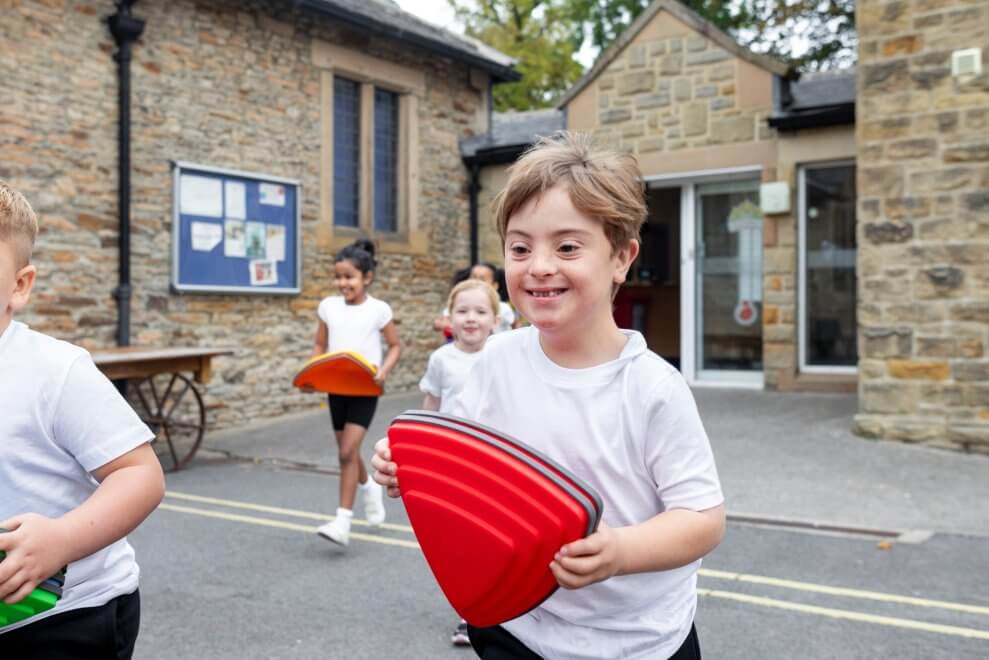
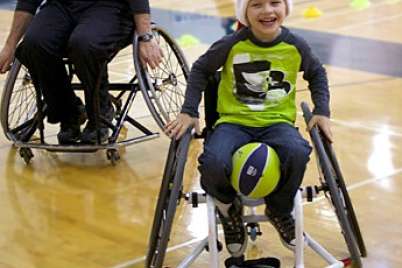
For instance, a student using a wheelchair is not limited by their body, but by a game played on grass with rules requiring running. When educators adjust the play surface, offer adapted equipment, or modify game rules, barriers can disappear. This shift reassures children that they belong just as they are, building emotional resilience and positive self-image.
If we want kids to move, we have to remember one fundamental truth: Kids want to have fun! Fun isn’t a bonus or a distraction from fitness—it’s the primary engine that drives it. When physical activity is framed purely as exercise, assessment, or discipline, kids will disengage. When it’s framed as play, exploration, and social connection, participation happens naturally.
Movement should be a lifelong source of health, connection, and happiness. When physical activity is rooted in joy and cooperative play rather than rigid performance metrics, children can develop strong social-emotional skills, form genuine friendships, and build confidence that carries into all areas of their lives.
Practical strategies for home and school
Parents and educators can apply inclusive movement practices every day. Here’s how:
1. Choice and flexibility
Instead of creating a standard lesson and retrofitting an “adaptation” for one student (which singles them out), design choices directly into the equipment and rules for everyone:
- Equipment choice: Offer various types of balls (different weights, textures, visual contrast, or sizes) for a single activity. Let every student choose the tool that offers them the right level of challenge.
- In the classroom: Provide a variety of equipment options (for example, balls of different sizes, weights, or textures) and multiple ways to score (such as marking multiple scoring lines at varying distances from a target), allowing every student to choose their preferred pathway to success.
- At home: Encourage play with diverse movement tools and focus on exploration rather than perfect technique, celebrating your child’s effort and personal choices.
2. Tiered challenge
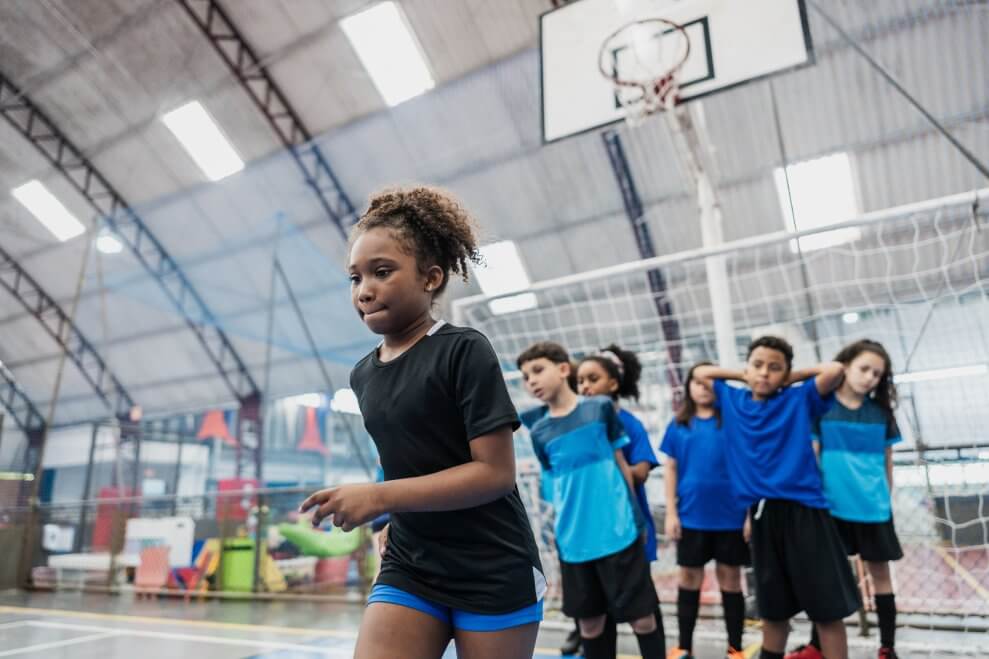
Challenge is relative. Running a time trial is trivial for some and daunting for others; the same applies to skill execution. Try to frame activities around individual progress rather than metrics.
3. Personal growth over comparison
- In the classroom: Use “Step-Up/Step-Down” options where students self-select challenge levels (this could be adjusting bat sizes or target distances) to focus on personal milestones, rather than peer-to-peer comparison, which increases competition levels for no reason.
- At home: Praise individual progress and persistence during physical activities, reinforcing that challenge is relative and growth comes from practice.
4. Cooperative mechanics over elimination
- Elimination games (like dodgeball or knockout) actively strip physical activity away from the students. Consider replacing elimination with resurrection mechanics or team-based continuous play—for instance, where “out” players complete a quick, fun movement challenge to re-enter immediately.
When parents and educators collaborate around inclusive practices, we can create a seamless circle of support for children. By removing environmental barriers, celebrating individual progress, and keeping play at the heart of physical activity, we help every child develop confidence, social-emotional strength, and a lifelong joy in movement and physical activity!