Figure skating: How your kids can try it at home
Although people have been zipping around on the ice since prehistoric times (they strapped bones to their feet!), figure skating as we know it began in the 1700s in Europe.
Early figure skaters competed by carving patterns or “figures” into the ice. In the 1800s, American ballet dancer Jackson Haines revolutionized this formal, stiff style of skating by adding music, dance moves, and jumps and spins.
Figure skating was the first winter sport to be included in the Olympic Games, in 1908, with men, ladies, and pairs all competing. Ice dancing was added in 1976 and now, in 2014, teams can compete.
How cool is this?
- Early skates were more like skis, because people needed to use poles to scoot themselves along. Some time in the Middle Ages, the Dutch developed the double-edged skate blade. It’s this double-edge that allows the hands-free push and glide motion that we know as skating today.
How to watch figure skating
- The athletes skate two different times in front of nine judges. The first skate is called a short program and the second is a free skate.
- The judges watch to see how well the skaters jump, spin, move their feet, and express themselves, and each assigns a score. The judges’ scores are combined into a total for each performance.
- The skater with the highest combined score, adding the scores for the two skates, wins.
Tessa Virtue, Scott Moir, and their iconic 2018 ice dance
Tessa and Scott won a gold medal at the Winter Olympics in PyeongChang. Their incredible performance is basically now Canadian lore.
How to try figure skating at home
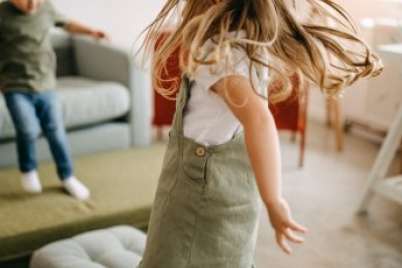
Your kids can pretend to figure skate at home by gliding or sliding on your hardwood or linoleum floors in socks (wool socks seem to be the most slippery!).
- See if they can glide on one foot, then try adding a spin (even sitting and trying it on their backside is a place to start).
- See if they can lean forward while balancing on one foot.
- Get them to try a jump straight up in the air and turn.
- See if they can turn on their toes.
Siblings can help each other with balancing, spinning, and gliding. Get them to jump at the same time.
See if they can do these jumps and balances and glides with some artistic movement. Put on their favourite song, crank up the volume, and get them to move to the music with jumps and turns and balances like a figure skater. Give them a standing ovation!
Editor’s note: This article was originally published on Feb. 10, 2014.