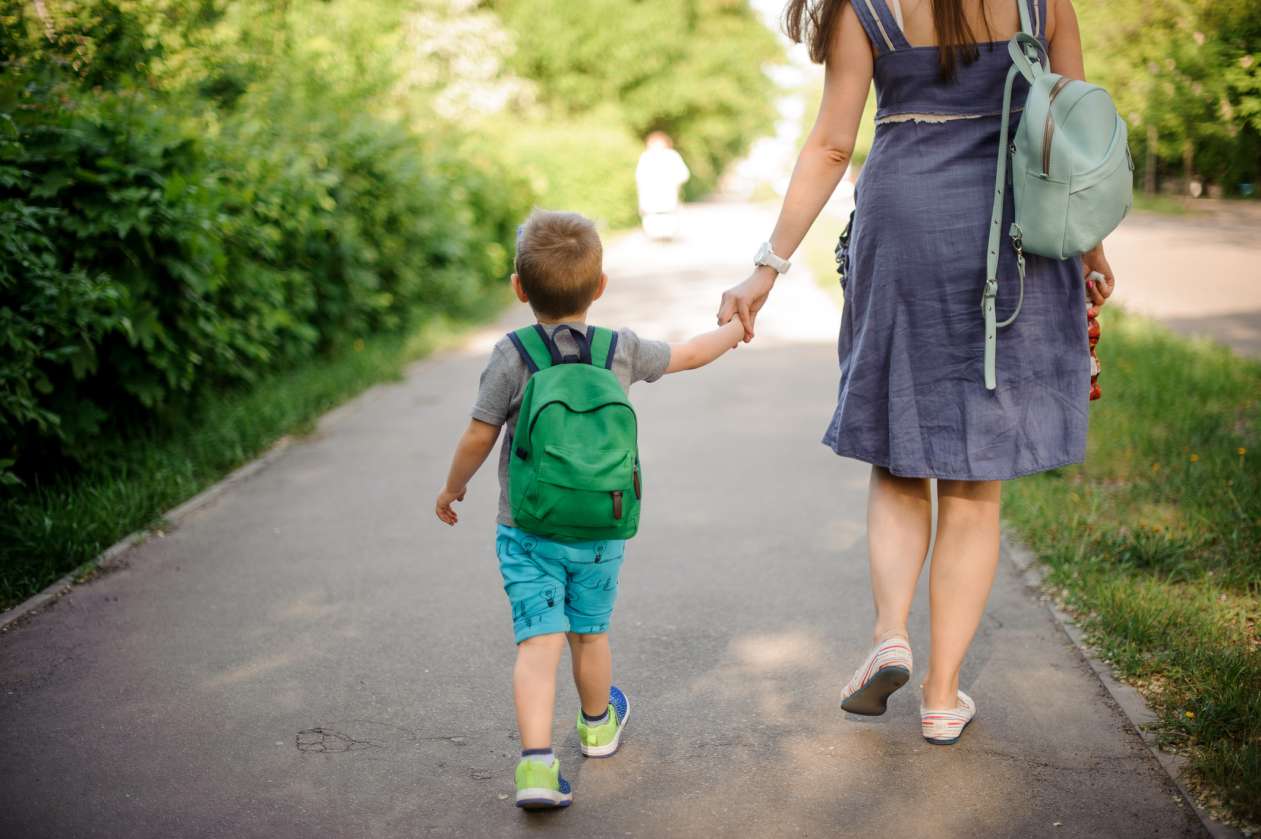
How to support your child to be physically active in kindergarten
Is your little one heading to kindergarten in the fall? There’s so much to be excited about, including school supplies, first-day-of-school outfits, and making new friends. In anticipation of this milestone, you’ve probably been helping them to recognize letters and numbers, reading with them, and encouraging them to become more independent.
Here’s something else to think about (don’t worry, it’s fun). Physical literacy plays an important role in your child’s first year of school. You can support your child in developing physical literacy by doing different activities at home—just like you likely already incorporate daily reading into your family’s schedule. In addition to helping your child practice writing their names and counting to 10, you can help them start (or, ideally, continue) learning to move.
The big idea in kindergarten is to guide children to make healthy choices and develop physical skills. There are lots of easy ways you can do this, while at home this summer, and help your child become more aware of their physical activity.
1. Help them to understand the effects of healthy, active living on the mind and body
This is simply done by asking your child how they feel or what they notice about their bodies after a walk or running around in the yard. My children have made observations like, “My heart is beating really fast, Mom!” or “I’m thirsty after all that running.”
2. Help them move their bodies every day
Kindergarteners will be expected to participate in daily physical activities. Have your child play hopscotch and talk about how many hops they can do. Hopscotch is an easy game to play in the summer (and even indoors in bad weather using just a roll of masking tape). Using colourful chalk you can create the standard line of squares or be creative and make a centipede with 28 circles. One circle can be the head, the other a tail, and the remaining 26 can be the letters of the alphabet. Encouraging your child to try new physical activities may also help them become less apprehensive about trying new things at school.
3. Help them use their large muscles
Children will be developing the use and control of large and small muscle groups in kindergarten. Large muscle activities like climbing, running, throwing a variety of balls, and balancing are all fun and easy to do with your kids. During my time in kindergarten, one of my favourite activities for large muscle development was the beach ball toss. This is a fun activity that my children and I do at the park with both large groups of friends or just the four of us. Using one beach ball to start, we hit the ball with any part of our bodies to keep it off the ground. Depending on how many people are playing we add a beach ball to make the game more challenging and add to the fun factor. This type of activity also helps build hand-eye coordination skills and flexibility in movement, all while having a blast with friends.
4. Help them use their small muscles
Small muscle group activities tend to be quieter and need less room to be completed. Building Lego, tying shoes, and buttoning buttons are all small muscle group activities and are perfect rainy day or travel activities. When my three kids were little (I had three under four years of age), we would bead Cheerios onto yarn and hang them in our yard for the squirrels and birds to enjoy. Now, my three are a little older and we have moved onto beading necklaces, bracelets, and knitting to continue building our fine motor skills. For more on kids’ physical development, read this explainer.
4 expectations for kindergarten students
1. Demonstrate an awareness of health and safety practices for themselves and others and a basic awareness of their own well-being
2. Participate willingly in a variety of activities that require the use of both large and small muscle groups
3. Develop control of large muscles (gross-motor control) in a variety of contexts
4. Develop control of small muscles (fine-motor control) in a variety of contexts
With just a little time devoted to practicing movement skills at home, your child will be able to have more fun with their friends at school and create a foundation for a lifetime of physical activity. What could be more exciting than that?




Love the beach ball game idea!